13 Proven Strategies for Managing Parents in Schools
Introduction
The most common complaint Jonno White hears from school principals is not about budgets, compliance, or even student behaviour. It is about parents. More specifically, it is about the weight of managing parents who are more present, more reactive, and more public than any generation of school families before them. A principal in a regional Australian independent school recently described her Monday morning routine: check the community Facebook group before checking emails, scan for posts tagged with the school's name, review the comments from the weekend, and decide whether any require a response before the bell rings. That is not a communications strategy. That is a state of siege.
The social media age has fundamentally restructured the relationship between schools and their communities. Research published in a 2025 Australian study found that parents increasingly experience school communication through the logic of social media platforms, where engagement, reaction, and public performance are the norms, not private dialogue. At the same time, a January 2024 survey by the National School Public Relations Association found that 96 percent of school communications officials said misinformation was a problem in their district, up from 81 percent in 2020, and 78 percent said their school had faced a challenge related to false information in the previous twelve months. The volume and speed of community reaction to school decisions has not simply increased. It has changed in kind.
Difficult parent interactions are now a regular, structural part of a principal's role. More than 70 percent of teachers in the United States report that disruptive behaviour has increased in recent years, and many describe a corresponding rise in parent advocacy and scrutiny, fuelled by social media, pandemic disruptions, and heightened expectations around student outcomes. In Australia, similar pressures have driven record rates of principal burnout and exit from the profession.
This guide is for principals, deputy principals, and school leaders who want to move from reactive to proactive in the way they manage parent and community relationships. The thirteen strategies below are not about managing parents as a problem. They are about building the kind of school community where parents are partners, disputes are rare, and when difficult moments do arise, the school has both the tools and the standing to navigate them with confidence.
Jonno White works with school leadership teams around the world to develop the communication skills, conflict frameworks, and team culture that make exactly this kind of leadership possible. To book a keynote, offsite, or workshop for your school, email jonno@consultclarity.org.
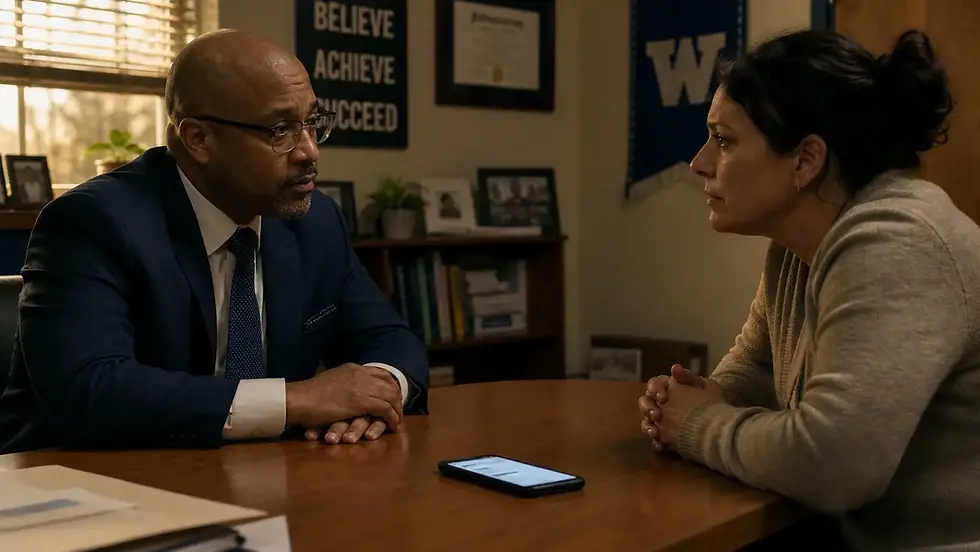
Why Managing Parents Has Never Been Harder
Understanding why the current moment is different is the first step to leading through it. The generation of parents now sending children to school grew up as early adopters of social media. They are comfortable expressing frustration publicly, tagging institutions, and mobilising peer groups online. What used to be a complaint raised in a private phone call to the school office can now become a 200-comment thread on a community Facebook group within hours, often without the school knowing the conversation has started.
The structural feature driving this is audience. In previous generations, an unhappy parent had limited reach: a conversation with another parent at school pickup, a letter to the board, a call to the principal. Social media removed the reach constraint entirely. A parent post that goes viral within a local community reaches hundreds of people who each bring their own experiences, frustrations, and agendas to the comment thread. The school is often the last to know and the most constrained in how it can respond, because it must protect student privacy, maintain professional standards, and avoid the trap of engaging in a public argument it cannot win.
Australian research from 2025 found that parents experience school social media practice as producing tensions rather than connections, with platform logic actively shaping what kinds of communication feel natural. The school posts something it considers informational. Parents filter it through the lens of engagement-seeking platforms where every post invites a response, a reaction, a share. The mismatch creates friction that neither party fully understands.
For school leaders, the cost is real. Principals report spending significant portions of their working week monitoring and responding to social media dynamics. This is time taken away from instructional leadership, staff development, and the strategic work that actually improves schools. The emotional toll is equally real: watching your professional integrity become the subject of a Facebook comments thread is a particular kind of exposure that school leaders were not trained for and that traditional leadership development rarely addresses.
The strategies below address both dimensions: the practical tools for managing specific situations, and the foundational work that reduces how often those situations arise.
How This List Was Compiled
These thirteen strategies are drawn from a synthesis of current research in school leadership and community engagement, practitioner accounts from school principals across Australia, the United Kingdom, and North America, and the direct experience of working with school leadership teams through complex community challenges. The list prioritises strategies that are practical, evidence-informed, and specifically designed for the current social media environment rather than the communication landscape of ten years ago. They are organised to move from foundational relationship-building through to crisis response and recovery.
Category One: Building the Foundation Before the Fire
These four strategies are the ones most principals know they should do and least often prioritise. They feel low-urgency until the moment of crisis, at which point they are the only thing that makes the crisis manageable.
1. Build Your Trust Bank Before You Need to Make a Withdrawal
The principals who navigate difficult community moments with the least damage are almost always the ones who invested in relationships long before any controversy arose. This is not a metaphor. Trust in schools functions like a bank account: every positive interaction, proactive communication, and visible act of care deposits goodwill that you can draw on when things go wrong. When a decision is controversial, a community that already trusts the principal is far more likely to give the benefit of the doubt, wait for an explanation, and engage through proper channels. A community that has had no positive contact with the principal is predisposed to assume the worst.
Practical trust-building looks like visibility: attending events, greeting parents at the gate, writing newsletters that communicate genuine personality and values rather than administrative updates. It also looks like early communication about decisions: when a school is considering a policy change, sharing the rationale before the decision is made tells the community it is a partner, not a recipient. Jonno White's facilitation work with school leadership teams consistently shows that the schools with the best community relationships are the ones that communicate generously in the positive, because they know every good-news post and every genuine conversation builds the account they will eventually need.
To build this kind of leadership capacity in your school team, contact jonno@consultclarity.org.
2. Own Your School's Narrative Before Someone Else Does
If you are not actively telling your school's story, someone else will, and you will not like the version they tell. This is one of the most consistently repeated pieces of advice from experienced principals across multiple countries, and it remains underimplemented because it requires consistent effort in the absence of any immediate crisis. A school that posts regularly on its own channels, shares student achievements, celebrates teacher milestones, documents what makes its culture distinctive, and communicates its values in action is building a narrative that is very hard to dislodge when a difficult situation arises.
Research from the National School Public Relations Association notes that building credibility before a crisis is the single most effective preparation for navigating one. Schools that only appear on social media during controversies train their community to associate the school's online presence with bad news. The school that shares joyful, authentic content week after week has a fundamentally different reputational starting point when difficult moments arrive. The goal is not marketing spin. It is genuine, consistent storytelling that helps parents feel connected to the actual life of the school, reducing the information vacuum that misinformation and rumour fill.
For more on how school leaders can develop communication strategies that build rather than defend, read Jonno's blog on principal safety at consultclarity.org.
3. Establish Clear Community Norms for Communication
Every school community has norms for how parents interact with the school. The question is whether those norms are set deliberately by the school or by default by whoever shouts loudest. Schools that name their expectations explicitly, and communicate them consistently, create a frame that makes it much easier to redirect behaviour that falls outside them. This is not about policing parents. It is about providing the entire community with clarity about the channels that work, the timelines for responses, and the behaviours that support rather than undermine the educational environment.
In practical terms, this means having a parent communication policy that is communicated at enrolment, revisited at the start of each year, and referenced when specific situations require it. It means clearly stating that concerns about individual children or teachers are handled through the teacher first, then the deputy, then the principal, and that contacting the principal directly without following those steps delays resolution rather than speeding it up. It means explaining social media expectations not as a legal threat but as a genuine explanation of why public posting about school matters creates outcomes that are worse for everyone, including the parent who posts. When these norms exist, principals have something concrete to point to rather than improvising boundaries in real time.
4. Create Regular Channels for Genuine Two-Way Communication
The most common driver of parent escalation is not unreasonable parents. It is parents who feel unheard. Schools that provide regular, genuine opportunities for parents to raise concerns before they become grievances intercept a significant proportion of what would otherwise become difficult interactions. This does not mean hosting complaint sessions. It means building structures where parents experience real dialogue: their input is sought, their questions receive substantive answers, and they can see evidence that their voice has shaped something.
Coffee with the principal sessions, regular surveys with published responses, parent advisory groups with genuine influence, and structured feedback opportunities at key transition points all serve this function. The specific format matters less than the consistency and the authenticity. Parents who feel they have access to a functioning dialogue channel are far less likely to take grievances to social media, because social media is most often a last resort for people who feel shut out. As Jonno White works with leadership teams to identify in facilitation sessions, the most corrosive parent relationships are almost always ones where communication broke down first and conflict followed.
For more on building teams that communicate well with their communities, email jonno@consultclarity.org.
Category Two: Handling Difficult Conversations Directly
These three strategies address what happens in the room, on the phone, or in a meeting when a parent brings a concern, a grievance, or a confrontation directly to the principal.
5. Listen First, Even When It Is Hard
When a parent arrives at the principal's office in an elevated emotional state, the natural instinct is to explain the school's position. This instinct is almost always counterproductive. Educational research consistently finds that most frustrated parents primarily want to feel heard before they are ready to engage in problem solving. A parent who feels dismissed or talked over will leave the meeting more frustrated than they arrived, regardless of how well the school's position was explained.
Active listening in this context means giving full attention without interrupting, asking clarifying questions that signal genuine curiosity, reflecting back what has been said, and explicitly acknowledging the emotion before moving to any form of response. Importantly, acknowledgement is not agreement. A principal can say 'I can hear how worried you are about this' without conceding that the concern is valid or the school is at fault. This distinction matters enormously in practice, because it allows the principal to validate the parent's experience while maintaining the school's position.
Jonno White's book Step Up or Step Out, available at Amazon, provides a practical framework for exactly this kind of conversation: acknowledging without capitulating, engaging without escalating. It is required reading for any school leader who manages difficult conversations as a regular part of their role.
6. Redirect to Shared Goals, Especially When It Gets Personal
Difficult parent conversations have a tendency to drift from the presenting issue toward personal accusations, political arguments, ideological disputes, and comparisons with other schools. When a conversation about a classroom incident becomes a referendum on the principal's leadership, or when a concern about a policy becomes an argument about values, the conversation has left territory where resolution is possible. Skilled school leaders know how to redirect without dismissing: by naming the drift and returning to the question of what the student needs.
The phrase that often works is some version of 'Let me bring us back to what we both want here, which is for the student to have a good experience at this school.' It is simple, it is genuine, and it shifts the frame from adversarial to collaborative without minimising the parent's concern. Framing decisions in terms of what benefits the student also helps parents understand that policies and procedures exist for reasons, not as arbitrary exercises of institutional power. When parents feel that the school's decisions are principled rather than convenient, even decisions they disagree with are easier to accept.
For facilitation training that helps school leadership teams navigate exactly these dynamics, reach out to jonno@consultclarity.org.
7. Know When to Take the Conversation Offline, and Offline Means Off the Record
A significant proportion of community conflict that ends up on social media began as a conversation that should have stayed private but did not. Schools need protocols for identifying when a concern has reached the threshold where it requires a private, documented conversation rather than a response in the public stream or the group email. The general principle is that anything involving a specific child, a specific teacher, or a specific incident should immediately be moved to a private channel. Public responses to specific grievances almost always make things worse, because they either reveal information that should be protected, or they signal that public pressure is an effective way to get the school's attention.
Taking a conversation offline also means establishing the right conditions for that conversation: a private space, a clear agenda, appropriate stakeholders present, and a documentation process. This is not bureaucratic caution. It is protection for everyone involved, including the parent, whose specific concern deserves more careful attention than a public reply allows. When principals model the expectation that serious concerns receive serious, private attention, it also reinforces that the purpose of the meeting is resolution, not performance.
Category Three: Navigating the Social Media Environment
These four strategies address the specific challenges of managing community dynamics in the social media age, including negative posts, misinformation, and the particular challenge of community groups the school does not control.
8. Regulate Before You Respond: Never Engage on Social Media in a Reactive State
The single most consistent piece of advice from experienced school leaders who have navigated social media crises is also the most counterintuitive: do not respond immediately. The instinct to defend, clarify, or correct a damaging post right away is almost always the instinct that makes things worse. When a principal responds to a hostile post while emotionally activated, the response tends to be defensive in tone, which amplifies the conflict rather than resolving it. The post has already been seen by dozens or hundreds of people. The principal's reactive reply is now part of a public thread that anyone can screenshot.
A useful framework is the BIFF response, developed by Bill Eddy and the High Conflict Institute: Brief, Informative, Friendly, and Firm. A BIFF response to a hostile parent post does not engage with the accusations, does not get personal, does not defend at length, and does not invite further debate. It acknowledges the concern briefly, states the school's commitment to safety or quality or whatever value is relevant, and directs the parent to a private channel for resolution. The entire response might be three sentences. The goal is to demonstrate professionalism to everyone watching, not to win the argument with the person posting. The more important follow-up is a private phone call or meeting invitation, which takes the conversation to a space where it can actually be resolved.
9. Flood Your Own Channels, Not the Community's Comment Sections
When a piece of misinformation about a school spreads through a parent community Facebook group, the principal's first instinct is often to correct it in that group. This is almost always the wrong move. The community Facebook group is a space the school does not control, does not moderate, and does not have authority within. Engaging there places the school in a position of pleading with an audience that has already formed an opinion, in a forum designed for reaction rather than resolution.
The far more effective response is to flood the school's own legitimate channels with accurate information. A clear, direct email to all parents, a post on the school's own social media, a message through the school communication platform, and if the situation warrants it, a short recorded message from the principal. Research from the National School Public Relations Association notes that schools that establish themselves as the most reliable and fastest source of accurate information about themselves reduce the impact of misinformation significantly. When parents know they will hear from the school directly and quickly, they are less likely to treat community group speculation as fact.
10. Have a Protocol for the First 24 Hours
The first 24 hours after a social media incident involving a school are the most consequential. In that window, the narrative is being formed, screenshots are being taken, and opinions are hardening. Schools that respond to these situations well almost universally have a protocol in place before anything happens. Schools that respond badly almost universally are making it up as they go.
A basic 24-hour protocol includes the following elements: a notification chain so the principal, deputy, and appropriate board or system leaders know within the first hour; a decision about whether to respond publicly at all and who has authority to do so; a draft statement that is brief, professional, and fact-based, reviewed by more than one person before it is posted; a direct private outreach to the parent or community member at the centre of the issue; and a plan for the follow-up communication to the wider community. The protocol does not need to be elaborate. It needs to exist before the incident occurs, be known to everyone in the leadership team, and be rehearsed enough that people know their role when the moment arrives.
11. Distinguish Between Legitimate Accountability and Bad-Faith Attacks
Not all parent criticism is unreasonable. Not all difficult community members are acting in bad faith. One of the traps experienced school leaders warn against is treating all community pressure as adversarial, because it produces a bunker mentality that isolates the school from the legitimate feedback it needs to improve. Some parent complaints are early signals of genuine problems in the school that deserve to be heard and acted on. Some community concern about a school decision reflects valid questions about process, fairness, or values that the school should take seriously.
The distinction that matters is between criticism that is aimed at improving outcomes for students and criticism that is aimed at personal attack, public humiliation, or gaining advantage for one family at the expense of others. The former deserves careful engagement. The latter requires boundary-setting. Principals who treat all parent pressure with the same defensive response fail to capture the legitimate signal in the noise. A school community that sees its principal genuinely respond to valid concerns is far more likely to trust that the principal will also hold the line appropriately when criticism is unfair.
As Jonno White often notes in school leadership workshops, the goal is not to win every argument with a parent. The goal is to build the kind of relationship where most arguments never start.
Category Four: Protecting Your Staff and Yourself
These two strategies address the dimension of this challenge that is least often discussed in leadership resources: what principals owe their staff, and what they owe themselves.
12. Protect Your Teachers in Public, Work With Them in Private
When a parent makes a public complaint about a specific teacher, the principal faces one of the most genuinely difficult tensions in school leadership: the obligation to take parent concerns seriously, and the obligation to protect staff from unfair or public attacks. The resolution of this tension is not to choose one over the other. It is to separate the public response from the private investigation.
In public, the principal's message should be consistent: this school takes all concerns seriously, we are looking into this, and we will follow our process. This message does not validate the parent's specific claim, but it does demonstrate that the school is not dismissing the concern. In private, the principal must follow through: talking to the teacher with genuine respect and care, explaining the complaint and the process, and making clear that the school's first assumption is professionalism, not negligence. The teacher who discovers that their principal is defending them publicly while addressing the concern privately experiences something rare and valuable: genuine institutional protection.
For more on building leadership cultures where staff feel genuinely valued and supported, reach out to jonno@consultclarity.org.
13. Protect Your Own Wellbeing as a Non-Negotiable Leadership Practice
The cumulative weight of managing parent relationships in the social media age is a genuine wellbeing issue for school leaders. Australian research consistently documents elevated rates of burnout, exit intention, and psychological distress among principals, with community pressure cited as one of the primary drivers. A principal who is depleted, anxious, and chronically reactive is a worse leader than the same principal with adequate support, recovery time, and perspective. This is not a self-indulgent observation. It is a practical leadership reality.
Sustainable principal leadership in this environment requires deliberate structures: supervision or coaching arrangements that give principals a confidential space to process difficult community interactions, collegial networks with other school leaders who understand the specific pressures of the role, and personal boundaries around monitoring community social media outside working hours. The principal who checks the community Facebook group at 10pm on a Sunday is not serving their school. They are depleting the resource their school most needs, which is a leader who arrives on Monday with perspective and capacity.
Jonno White provides executive coaching and facilitation for school leaders navigating exactly these pressures. Whether you need a facilitated team offsite to rebuild your leadership culture, or a keynote that opens a different conversation about what school leadership demands, email jonno@consultclarity.org. International travel is often far more affordable than clients expect, and many school leaders find that engaging Jonno costs less than the ongoing cost of a leadership team operating without the clarity it needs.
Notable Voices in This Space
Several researchers and practitioners are doing important work on the intersection of school leadership, community engagement, and social media. The CAP (Canadian Association of Principals) journal has published practitioner research on how principals experience the parallel universe of social media, including first-hand accounts of how community group dynamics reshaped professional identity and daily practice. The National School Public Relations Association in the United States has developed systematic frameworks for schools navigating misinformation, including regular surveys of the scale and nature of the challenge. Australian researchers at multiple universities have begun examining the specific experience of parents within school social media practice, revealing tensions between schools' intentions and parents' experiences that neither side fully understands. These voices deserve attention from any school leader who wants to understand this terrain with more than anecdotal depth.
Common Mistakes to Avoid
The most common mistake school leaders make in this environment is waiting for a problem to occur before building the relationship infrastructure to handle it. Trust, narrative, communication norms, and clear protocols all take time to establish. The principal who begins building them only when crisis has already arrived finds that the very tools they need are unavailable. By the time the crisis hits, the trust bank should already have deposits in it.
A related mistake is treating social media as a threat to be minimised rather than a channel to be used strategically. Schools that avoid social media out of caution leave a narrative vacuum that others fill. Discomfort with social media is understandable. Ceding the channel entirely is a strategic mistake that consistently makes communication crises worse.
A third mistake is responding to every difficult parent the same way. Not all difficult parents are difficult for the same reason. Some are anxious and seeking reassurance. Some are frustrated by a specific unresolved issue. Some are genuinely unreasonable. Some are advocating for a legitimate concern in an unproductive way. Each requires a different response, and the ability to distinguish between them is one of the most valuable skills a principal can develop. Jonno White's workshops on difficult conversations and communication styles help leadership teams build exactly this capacity, through frameworks like DISC and Working Genius that reveal why people communicate the way they do and what actually moves the conversation forward.
Email jonno@consultclarity.org to find out more.
A fourth mistake is neglecting staff. When parent pressure intensifies, it almost always falls on teachers and front-line staff first. Principals who fail to actively protect, support, and communicate with their staff during community conflicts find that staff morale collapses, which makes the school less effective at every level. The principal who is seen standing firmly between their staff and unfair community attacks builds a culture of loyalty and trust that pays dividends for years.
Finally, principals who try to carry the weight of community management entirely alone burn out faster and lead less effectively than those who build their support structures deliberately. Leadership coaching, peer networks, professional supervision, and facilitated team development are not luxuries for school leaders in the current environment. They are professional requirements.
Implementation Guide: Taking Action
The best starting point is an honest audit. Principals should ask themselves three questions: What does the community currently think about us, and how do I know? What are our communication protocols when something goes wrong, and does every member of the leadership team know them? Where is our trust bank right now, and is it in credit or debit?
Once the audit is complete, prioritise the foundational work: establish the communication norms, build the content calendar for the school's own channels, and create the 24-hour crisis protocol. These are the investments that compound over time. None of them requires significant resources. They require consistent leadership attention.
The second tier is developing the interpersonal skills: active listening, redirecting difficult conversations, and the capacity to distinguish legitimate accountability from bad-faith attack. These skills can be developed through professional learning, coaching, or facilitation. Jonno White delivers workshops and keynotes specifically designed for school leadership teams that want to build these capabilities in a structured, practical way. His work with schools around the world consistently demonstrates that the teams who invest in communication and conflict skills before they need them navigate community challenges with significantly less damage and recover significantly faster than those who improvise.
To discuss what this could look like for your school, email jonno@consultclarity.org. Many school leaders are surprised to find that international travel for a keynote or facilitated day costs far less than expected, and that the return on investment in leadership team clarity is immediate.
Frequently Asked Questions
How should a school principal respond to negative comments on social media?
The most effective first step is to regulate your own emotional response before responding at all. Once you are in a calm, professional state, a brief, informative, friendly, and firm response that acknowledges the concern and directs the parent to a private channel is almost always better than a detailed public defence. The goal of the public response is to demonstrate professionalism to the audience, not to resolve the specific issue. Resolution happens privately.
How do you deal with difficult parents as a school principal?
The foundational approach is to listen actively before responding, redirect to shared goals when conversations drift into personal territory, and focus on what the student needs. Most difficult interactions de-escalate when the parent feels genuinely heard. The distinction between acknowledgement and agreement is essential: validating that a parent's concern is real does not require agreeing that their version of events is accurate.
What do you do when parents post misinformation about your school on social media?
Flood your own legitimate channels with accurate information rather than engaging in community group debates you cannot control or moderate. Direct, timely communication from the school to all parents, through the school's own platforms and email, is consistently more effective than attempting to correct misinformation in spaces designed for reaction rather than resolution.
How can schools build trust with parents and the community?
Trust is built through proactive, consistent communication that gives the community an accurate picture of school life before anything goes wrong. Visibility of school leadership, regular genuine two-way communication channels, and transparent explanations of decisions all contribute. The single most important factor is whether parents feel heard when they raise concerns, which requires responsive and respectful processes for handling feedback.
How do principals handle parent versus teacher conflict?
The proven approach is to validate the concern professionally in public without validating the specific claim, while privately conducting a respectful, fair, and thorough process. The teacher needs to know the principal is in their corner. The parent needs to know the concern is being taken seriously. Both are possible simultaneously. The principal who chooses one at the expense of the other almost always makes the situation worse.
Can I hire someone to help my school leadership team navigate these challenges?
Yes. Jonno White is a Brisbane-based leadership consultant who works with school leadership teams around the world on exactly these challenges. He delivers keynotes, workshops, executive team offsites, and MC services to schools across Australia, the UK, the USA, and beyond. Whether your team needs a structured conversation about communication culture, practical frameworks for difficult conversations, or a facilitated day to rebuild clarity and alignment, Jonno can help. International travel is often far more affordable than clients expect.
Email jonno@consultclarity.org to start a conversation.
What is the BIFF response strategy and how do principals use it?
The BIFF response, developed by Bill Eddy and the High Conflict Institute, stands for Brief, Informative, Friendly, and Firm. It is a framework for responding to hostile or escalating communication in a way that does not inflame the conflict. For school leaders, it provides a template for social media responses, difficult emails, and even in-person conversations where the goal is to de-escalate rather than engage. The key discipline is brevity: a BIFF response is three to five sentences, not a detailed rebuttal.
Final Thoughts
Managing parents and community in the social media age is one of the genuine frontier challenges of school leadership. The tools that served principals well ten years ago, managing one unhappy family at a time through the proper channels, are necessary but no longer sufficient. The current environment requires a more sophisticated and more deliberate set of skills: the ability to build narrative before crisis, to respond to public pressure without being controlled by it, to protect staff while remaining genuinely open to legitimate feedback, and to sustain personal wellbeing under conditions of heightened public scrutiny.
None of these skills are developed by accident. They are developed through intention, practice, and often through working with someone who can see your leadership from the outside and help you navigate the moments that feel impossible from the inside. The principals who are thriving in this environment are not the ones who have avoided difficult community moments. They are the ones who have built the capacity, the protocols, and the relationships that allow them to navigate those moments without losing what matters most.
Jonno White has worked with school leaders across Australia, the UK, the USA, and beyond to build exactly this kind of capacity. His book Step Up or Step Out, available at Amazon, offers a practical framework for the kinds of difficult conversations that are now a structural part of school leadership. His keynotes, workshops, and facilitation sessions help leadership teams build the communication skills, conflict frameworks, and team culture to lead well in a world where community dynamics are public, reactive, and unforgiving.
Email jonno@consultclarity.org to discuss what this could mean for your school.
For more on the specific challenges school leaders face, read Jonno's blog 17 Essential Strategies for Principal Safety at Work at consultclarity.org.
About the Author
Jonno White is a Certified Working Genius Facilitator, bestselling author, and leadership consultant who has worked with schools, corporates, and nonprofits across the UK, India, Australia, Canada, Mongolia, New Zealand, Romania, Singapore, South Africa, USA, Finland, Namibia, and more. His book Step Up or Step Out has sold over 10,000 copies globally, and his podcast The Leadership Conversations has featured 230+ episodes reaching listeners in 150+ countries. Jonno founded The 7 Questions Movement with 6,000+ participating leaders and achieved a 93.75% satisfaction rating for his Working Genius masterclass at the ASBA 2025 National Conference. Based in Brisbane, Australia, Jonno works globally and regularly travels for speaking and facilitation engagements. Organisations consistently find that international travel is far more affordable than expected.
To book Jonno for your next keynote, workshop, or facilitation session, email jonno@consultclarity.org.
Next Read: 17 Essential Strategies for Principal Safety at Work
There is a phrase that appeared in a Monash University research report published in early 2026 that should stop every school board member in their tracks. A principal, reflecting on the violence they routinely face, described being physically assaulted and said: that's just another normal day at school for me. That sentence is not resilience. It is a profession in crisis.
Violence against school principals has ceased to be a fringe issue confined to the most underfunded or difficult schools. It is now a mainstream reality being documented in national research, discussed at professional conferences, and cited as one of the primary drivers of principal exit from the profession.