50 Leading Global Thought Leaders in General Practice Medicine
Introduction
The most important doctor in any healthcare system is the one who knows the patient. Not the cardiologist who sees them for six weeks after a heart attack, not the surgeon who operates and sends them home, and not the specialist who manages their single most dramatic diagnosis. The doctor who changes health outcomes at a population level is the general practitioner, the family physician, the generalist who holds the complexity of a whole person across time. When the evidence is examined consistently, strong primary care systems produce healthier populations, lower costs, and more equitable outcomes than systems built around specialised hospital care. That finding has been replicated across countries, health systems, and income levels for decades.
And yet general practice is arguably the most underfunded, undervalued, and underrepresented discipline in global healthcare right now. In Australia, the RACGP's Health of the Nation 2025 report found that health system fragmentation and communication failures are the leading concerns among practising GPs. In the United States, fewer than one-third of family physicians now work in independent practice, down from 60 percent a generation ago. Across the United Kingdom, the NHS 10-year plan acknowledges an urgent need for structural reform. The World Health Organization has repeatedly warned that without significant new investment in primary care, universal health coverage will remain out of reach for hundreds of millions of people globally.
The good news is that a remarkable group of practitioners, researchers, advocates, and innovators are doing something about it. They are rebuilding the model of general practice from the inside, arguing for its value in the corridors of government and health systems, redesigning care delivery for communities that have been underserved for generations, and training the doctors who will choose the complex, rewarding, and essential work of being a GP.
This list brings together 50 of the most influential and active thought leaders in general practice medicine globally. They span clinicians still seeing patients, researchers producing the evidence that changes practice, policy advocates fighting for investment in primary care, innovators reimagining how care is delivered, and educators shaping the next generation of family doctors. They come from Australia, the United Kingdom, the United States, Canada, Hong Kong, Nigeria, Ethiopia, Peru, Israel, Singapore, and more. Their backgrounds span Indigenous health advocacy, direct primary care, global family medicine diplomacy, overdiagnosis research, health equity, lifestyle medicine, and digital primary care.
General practice medicine is a leadership challenge as much as a clinical one. Jonno White works with healthcare teams to build the communication, accountability, and culture that help GPs and practice leaders do their best work. Reach out at jonno@consultclarity.org.
Why General Practice Medicine Matters
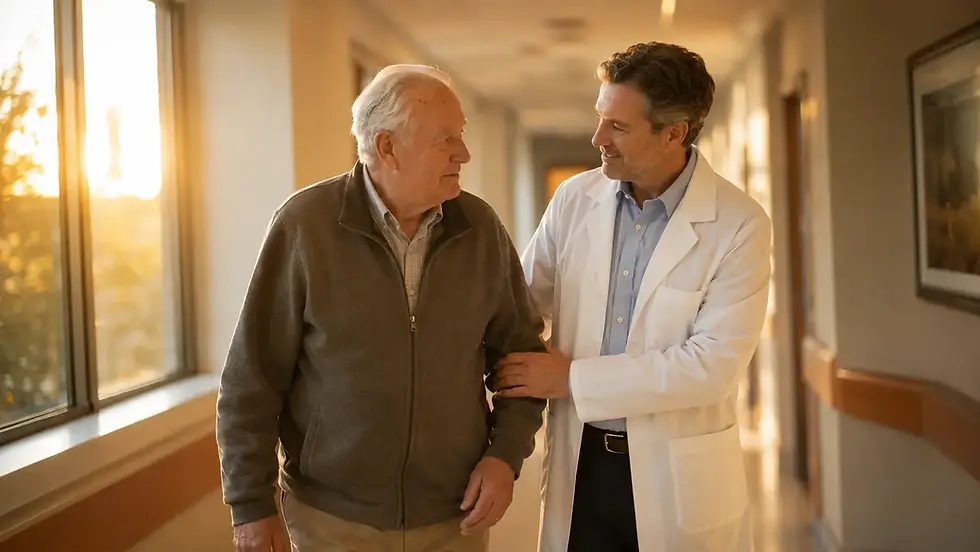
General practice is not a simplified version of hospital medicine. It is a distinct and extraordinarily demanding discipline in its own right. The GP must manage uncertainty that specialists rarely face: the patient who presents with symptoms that could indicate one of a dozen conditions, the person managing four or five chronic conditions simultaneously, the family dealing with grief, addiction, domestic violence, and diabetes in the same household. The scope of clinical knowledge required is broader than any specialty, and the relational skills required are at least as demanding as the clinical ones.
The evidence for what strong primary care achieves is compelling. Countries investing heavily in primary care have better outcomes on virtually every population health measure, from life expectancy and preventable hospitalisations to health system costs and patient satisfaction. Communities with strong GP relationships experience better cancer screening rates, better chronic disease management, and significantly better health equity outcomes. The reduction of avoidable emergency presentations alone represents billions of dollars annually in system savings wherever primary care is properly resourced.
What is at stake when general practice weakens is not just clinical capacity. It is the entire model of continuity, comprehensiveness, and coordination that makes healthcare function as a system rather than a collection of disconnected interventions. The thought leaders on this list understand that, and they are articulating it publicly in ways that are beginning to shift policy, funding, and public understanding of what the GP does and why it matters.
If you lead a general practice or healthcare organisation and want to build the team culture and communication structures that help your people do their best work, Jonno White delivers workshops and facilitation sessions for healthcare teams globally. Email jonno@consultclarity.org.
How This List Was Compiled
This list was built with geographic and disciplinary diversity as explicit priorities. The goal was to move past the small group of household names that appear on every healthcare thought leadership list and surface people whose contribution to general practice medicine specifically is substantive, current, and ongoing. Selection criteria included a genuine track record of contribution through research, advocacy, clinical innovation, or public communication; active engagement with the most pressing issues in global primary care; geographic representation across Australia, the United Kingdom, the United States, Canada, and other regions globally; and disciplinary breadth spanning workforce, equity, evidence-based medicine, direct care models, global family medicine policy, rural and remote medicine, digital health, and education.
The list includes current presidents of major global organisations, researchers who have shaped what practitioners know about multimorbidity and overdiagnosis, clinicians who have rebuilt practice models from the ground up, and emerging voices who are defining the conversation about the next generation of general practice. It deliberately surfaces voices from Africa, Latin America, Asia, and the Pacific alongside the more familiar English-speaking western voices, because the global conversation about primary care cannot be complete without them.
Category 1: Global Family Medicine Leaders
The world's most important organisations for general practice medicine do not typically generate celebrity thought leaders. The work of advancing primary care globally is slow, diplomatically complex, and largely invisible to the public. The people who do it well are exceptional, combining clinical credibility with political acuity, and they carry the argument for family medicine into places where it has historically been marginalised.
1. Viviana Martinez-Bianchi
WONCA / Duke University, USA and Argentina
Viviana Martinez-Bianchi made history when she was inaugurated as the President of the World Organization of Family Doctors at the WONCA World Conference in Lisbon, Portugal in September 2025, becoming the first person from Latin America and the first woman from the Americas to hold the position. She holds a dual appointment as Associate Professor and Director of Community Engagement at Duke University's Department of Family Medicine and Community Health, where she spent fifteen years directing the family medicine residency programme and building equitable primary care models for Latinx communities.
Her most concrete recent contribution is LATIN-19, the Latinx Advocacy Team and Interdisciplinary Network for COVID-19, which she co-founded with Dr. Gabriela Maradiaga Panayotti to dramatically expand vaccine access and COVID-19 testing for marginalised communities in North Carolina. In her WONCA presidency, which runs until 2027, she is pursuing a vision of comprehensive primary care as a universal foundation for health equity, with particular focus on strengthening family medicine in health systems where it remains underfunded and undervalued.
2. Michael Kidd
University of Oxford / University of New South Wales, Australia
Michael Kidd is one of the most credentialled global voices in family medicine, with a career spanning clinical practice, academic leadership, and global health policy at the highest levels. He is Professor of Global Primary Care and Future Health Systems at the Nuffield Department of Primary Care Health Sciences at the University of Oxford, and the inaugural Director of the Centre for Future Health Systems at the University of New South Wales. He has previously served as WONCA World President and as Deputy Chief Medical Officer of Australia during the COVID-19 pandemic.
"The Contribution of Family Medicine to Improving Health Systems," the WONCA-commissioned guidebook he edited, remains one of the most authoritative texts establishing the evidence for primary care investment. Kidd's consistent articulation of the population health case for family medicine, delivered across academic, policy, and public platforms with unusual reach, has made him one of the most trusted voices connecting clinical general practice to the systems arguments that determine funding and policy globally.
3. Donald Li
Private practice / Past WONCA World President, Hong Kong
Donald Li served as WONCA World President from November 2018 to 2022 and remains one of the most active senior voices in global family medicine, particularly across the Asia-Pacific region. His keynote address at the WONCA Asia-Pacific Regional Conference in Iloilo, Philippines in early 2026 reinforced his continuing prominence in a field where elder statesmen often step back from active contribution. He has maintained active family physician practice in Hong Kong throughout his international leadership roles.
His contribution to the global family medicine conversation includes sustained advocacy for family medicine as a specialty deserving academic status, research infrastructure, and proper health system funding in countries where it has historically been treated as a residual category. His influence on the development of family medicine across Asia, where training pathways and professional recognition vary enormously between systems, has been substantial and enduring. He was the first family doctor elected as President of the Hong Kong Academy of Medicine between 2012 and 2016.
4. Goh Lee Gan
WONCA Asia Pacific / Singapore
Goh Lee Gan is a former WONCA World President and one of the most respected senior figures in global family medicine. His leadership helped establish the intellectual and organisational framework through which family medicine developed as an academic discipline in Singapore and across Southeast Asia, at a time when the specialty was fighting for recognition in health systems dominated by hospital-based specialist care.
His published work on the definition and measurement of quality in family practice, the foundations of family medicine education in the Asia-Pacific context, and the long project of establishing family medicine as a recognised specialty with its own evidence base has had lasting influence. In a region where primary care models vary enormously between systems and where the case for family medicine must be made afresh in each country, his decades of patient advocacy have built something durable and important.
5. Shewit Osman
WHO Africa, Ethiopia
Shewit Osman is an Ethiopian family physician and a prominent advocate for strengthening primary care in the African context, where health system investment has historically been concentrated at tertiary hospital level. She works with WHO Africa on primary health care strengthening and is an active voice on global platforms engaging with primary care conversations, particularly around health equity, universal health coverage, and the workforce development challenges facing family medicine in low-income settings.
Her contribution to the conversation is the lived experience of building primary care capacity in resource-constrained environments, and a consistent challenge to the assumption that strong primary care requires the infrastructure of wealthy health systems. Her perspective on what works at the grassroots level of African family medicine is genuinely different from most voices on global primary care lists, which tend to centre high-income country concerns. With the majority of the world's unmet primary care need concentrated in sub-Saharan Africa, her voice is essential to any complete global conversation.
6. Fiorella Sarmiento
WONCA Iberoamerica, Peru
Fiorella Sarmiento is a family physician and a leading voice in family medicine across Latin America, contributing to WONCA Iberoamerica's work on primary care development across a region with distinctive challenges: fragmented financing systems, uneven GP training infrastructure, significant urban-rural divides in access, and health systems that have historically prioritised hospital-based specialist care over community-based family medicine.
Her work addresses these systemic barriers from a practitioner's perspective, advocating for the kind of comprehensive primary care that the evidence consistently shows improves population health outcomes at sustainable cost. She is part of the emerging global chorus arguing that investment in family medicine is not a luxury reserved for wealthy nations but a non-negotiable component of any health system that takes equitable outcomes seriously.
7. Kameron Matthews
IMPaCT Care, USA
Kameron Matthews is a board-certified family physician, physician executive, and one of the most active voices in American primary care on the intersection of health equity, community health worker models, and value-based care. She is the Chief Health Officer of IMPaCT Care, a public benefit corporation that helps health organisations unlock the power of the grassroots community health workforce. She was elected to the National Academy of Medicine and named a 2022 LinkedIn Top Voice in Healthcare.
Her career has spanned Federally Qualified Health Centers, the Department of Veterans Affairs at senior executive level, and value-based care organisations, always with a focus on underserved populations. Her published research on delivering health equity at scale in value-based care settings, combined with her co-founding of Tour for Diversity in Medicine, a national initiative to build a more representative healthcare workforce, makes her one of the most practically effective voices in American primary care equity work.
Category 2: Primary Care Reformers and Innovators
The model of general practice is under pressure across virtually every high-income health system, and the people most active in reimagining it come from strikingly different directions: some are rebuilding practice economics from the ground up through direct primary care, others are redesigning team-based care models, and others are challenging the administrative and payment structures that drive physician burnout and practice closure. What they share is an insistence that the problem is structural, not personal.
8. Rushika Fernandopulle
Liza Health, USA
Rushika Fernandopulle is one of the most consistently innovative thinkers in primary care redesign, with a track record that includes co-founding Iora Health, one of the first organisations to build a primary care model genuinely designed around the needs of high-risk patients rather than insurance billing structures. Iora Health was acquired by Amazon in 2023. He is currently the CEO of Liza Health, building an AI-enabled platform for primary care.
His particular contribution to the thought leadership conversation is the relentless examination of how primary care's dysfunction is structural rather than personal: not a failure of individual GPs but a failure of the systems in which they work. His keynote appearances and writing consistently argue that the path to better primary care runs through better business models and better technology, not harder-working doctors in unchanged systems.
9. Clint Flanagan
Nextera Healthcare, USA
Clint Flanagan is the CEO and co-founder of Nextera Healthcare, one of the largest direct primary care organisations in the United States, and one of the most prominent practitioner-advocates for the direct primary care model nationally. His work demonstrating that DPC can deliver better patient experience, better physician satisfaction, and lower total cost of care has made him a central figure in the policy conversation about primary care payment reform.
His specific contribution includes practical leadership of a DPC organisation at scale, combined with active engagement in the legislative and policy work that led to the Primary Care Enhancement Act, which from 2026 allows Americans with HSA-qualified plans to use pre-tax dollars to pay for direct primary care membership fees. He is regularly cited by DPC advocates as one of the people most responsible for demonstrating that the model works operationally, not just theoretically.
10. Rebekah Bernard
Gulf Coast Direct Primary Care, USA
Rebekah Bernard is a family physician, the founder of Gulf Coast Direct Primary Care in Fort Myers, Florida, a prolific author on physician advocacy and practice independence, and one of the most active writer-clinicians covering the business and politics of primary care medicine. Her four books address physician wellness, scope of practice, and the structural forces driving doctors out of independent practice, and her regular contributions to Medical Economics and her "Physicians Taking Back Medicine" podcast give her unusual reach into the practising physician community.
Her specific published contribution includes her most recent book Imposter Doctors, which examines the boundaries of medical practice and the scope-of-practice debates that directly affect how primary care is delivered. Her willingness to take clear positions on contested questions in organised medicine makes her a genuinely distinctive voice, and her participation in the Medical Economics 2025 roundtable on the future of independent practice brought data and conviction to one of the most urgent conversations in American family medicine.
11. Philip Eskew
Philip Eskew Consulting, USA
Philip Eskew is a DO, JD, and MBA who has dedicated his career to the legal, regulatory, and practical advancement of direct primary care as a model for reforming American primary care. He is a board member of the DPC Alliance and one of the most authoritative voices on the legal framework through which DPC practices operate, translating complex regulatory questions into practical guidance for physicians considering the model.
His particular contribution is bridging the legal and clinical worlds in a field where regulatory uncertainty has historically been one of the major barriers to DPC adoption. As 34 US states have now enacted DPC-specific legislation and the federal Primary Care Enhancement Act has opened HSA access to DPC membership fees, his long-term advocacy work is producing tangible outcomes for the thousands of physicians who have used the model to escape insurance-driven practice.
12. Dike Drummond
The Happy MD, USA
Dike Drummond is a physician coach, speaker, and the founder of The Happy MD, a platform focused specifically on reducing physician burnout in primary care. His work sits at the intersection of general practice medicine and leadership development, addressing the structural and psychological dynamics that cause GPs to leave medicine, reduce their hours, or become disengaged from the work they trained for. He is highly active on LinkedIn with regular posts on burnout prevention, career sustainability, and practice design.
His specific contribution is the practical, evidence-based coaching curriculum he has developed and delivered to thousands of physicians, and his public articulation of the argument that physician burnout is a system problem requiring system solutions, not a personal failing requiring resilience training. His book Stop Physician Burnout and his regular writing on the topic have made him one of the most widely read voices on this specific and urgent issue in general practice.
13. Melissa Lucarelli
Solo Family Practice, Wisconsin, USA
Melissa Lucarelli is a family physician practising independently in Wisconsin and one of the most articulate advocates for independent primary care in the American medical conversation. Her practice, in operation for more than twenty-five years, is among the minority of family medicine practices still operating outside hospital system ownership, and her regular appearances in Medical Economics bring a ground-level perspective that larger system voices tend to lack.
Her specific contribution to the thought leadership conversation was sharpened by her participation in the Medical Economics roundtable on the future of independent practice in 2025, where she drew on American Board of Family Medicine data showing that the share of family physicians working independently has fallen to around one-third of the profession. Her consistent advocacy for the conditions, policies, and business models that could reverse that trend makes her an important voice in the primary care reform conversation.
14. Yusra Ahmad
Family Medicine for America's Health, USA
Yusra Ahmad is a family physician and a leadership voice within Family Medicine for America's Health, one of the primary advocacy and communication organisations working to reposition family medicine's value in the American health system. She is active on LinkedIn engaging with the primary care investment, workforce, and payment reform conversations, and brings a physician's perspective to the policy debates that determine how family medicine is resourced and recognised.
Her contribution to the conversation includes engagement with the Starfield Summit on Advancing AI and Digital Health in Primary Care, convened by the AAFP and Rock Health in May 2025, which produced a shared vision for how AI can strengthen rather than replace the core values of family medicine. Her advocacy for primary care as a high-value investment for the American health system connects clinical experience with the economic and policy arguments that move funding decisions.
Category 3: Research and Evidence Leaders
The evidence base for general practice is built by a relatively small community of researchers who understand both the clinical complexity of primary care and the methodological challenges of conducting research in a setting where the presenting problem is often undefined, the population is heterogeneous, and the outcomes are long-term. These researchers have shaped what practitioners know about multimorbidity, overdiagnosis, evidence-based medicine in the consultation, and the measurement of quality in primary care.
15. Paul Glasziou
Bond University (Emeritus), Australia
Paul Glasziou is Emeritus Professor of Evidence-Based Medicine at Bond University in Queensland, Australia, and one of the world's leading researchers on evidence-based medicine, overdiagnosis, and overtreatment. He was the Director of the Centre for Evidence-Based Medicine at Oxford from 2003 to 2010. His research has played a central role in establishing the empirical case for addressing overdiagnosis in primary care, a field that challenges the assumption that more testing and more treatment is always better medicine.
The Preventing Overdiagnosis international conference series was co-launched by Glasziou and Dr. Ray Moynihan, and has grown into one of the most important global gatherings for primary care researchers working on diagnostic and treatment harms. His published research on the harms as well as benefits of diagnostic testing in primary care, and his practical frameworks for GP decision-making under uncertainty, have influenced clinical guidelines and practitioner thinking globally.
16. Hajira Dambha-Miller
University of Southampton / BJGP Open, UK
Hajira Dambha-Miller is a practising GP, Associate Professor at the University of Southampton, and the Editor-in-Chief of BJGP Open, the international peer-reviewed open-access journal of primary care published by the Royal College of General Practitioners. Her research uses large-scale electronic health records and artificial intelligence to study multimorbidity, the management of multiple long-term conditions simultaneously, and the prevention of chronic disease in primary care populations.
Her BJGP Open editorship, combined with her research leadership on the NIHR Multiple Long-Term Conditions collaboration, makes her one of the most significant bridges between primary care research and clinical practice in the UK. Her 2026 editorial on the journal's most-read research articles of 2025 identified AI integration, health system reform, and the clinical management of complex multimorbid patients as the themes most active in the global primary care research community.
17. Trisha Greenhalgh
University of Oxford, UK
Trisha Greenhalgh is Professor of Primary Care Health Sciences at the University of Oxford and one of the most influential critical thinkers in evidence-based medicine. She is best known for her book "How to Read a Paper: The Basics of Evidence-Based Medicine," which has been through multiple editions and is widely considered the most accessible introduction to evidence-based medicine for practising clinicians. Her career has also included sustained critical analysis of the limitations of narrowly quantitative evidence-based medicine frameworks.
Her specific contribution to the thought leadership conversation includes her influential critique of simplified evidence hierarchies that undervalue qualitative research and clinical judgment in complex primary care situations. Her published work on the complexity of implementing evidence in general practice, on telehealth and digital health in primary care, and on COVID-19 as a complex system challenge has kept her at the forefront of the conversation about how primary care thinks about and uses research evidence.
18. Joanne Reeve
Hull York Medical School, UK
Joanne Reeve is Professor of Primary Care Research at Hull York Medical School and one of the leading UK voices on complexity in general practice, particularly the challenge of delivering person-centred care to patients with multimorbidity. Her research has focused on the theoretical and practical frameworks through which GPs can make good clinical decisions with and for complex patients.
Her specific recent contribution includes work on person-centred multimorbidity care in UK primary care, published in the Annals of Family Medicine in 2026, examining what practical changes in clinical practice are most effective for patients managing multiple long-term conditions simultaneously. Her combination of theoretical rigour and deep clinical experience makes her one of the most valuable research voices on the specific challenges of complexity that define modern general practice.
19. Rae Thomas
Bond University, Australia
Rae Thomas is a researcher at Bond University's Institute for Evidence-Based Healthcare and a leading voice on overdiagnosis, shared decision-making, and the evaluation of healthcare interventions in primary care. Her research engages with one of the most difficult problems in general practice: helping patients and practitioners navigate the genuine uncertainty about when investigation and treatment produces benefit versus harm.
Her specific published work on the communication of diagnostic uncertainty, on overdiagnosis in common conditions managed in general practice, and on the patient experience of diagnostic labelling has contributed practically to how clinicians are trained to have honest conversations about what screening and testing can and cannot tell us. She is active on LinkedIn and speaks regularly at evidence-based medicine conferences, bringing the overdiagnosis conversation to practising GPs.
20. Graham Watt
University of Glasgow (Emeritus), UK
Graham Watt is Emeritus Professor of General Practice at the University of Glasgow and the founding figure of the "Deep End" movement in UK general practice, which draws attention to the GP practices serving the most deprived communities and the structural inequalities in how primary care is resourced and supported. His argument that the practices with the greatest need receive the least support has reshaped how the NHS thinks about allocating primary care resource.
His specific contribution includes decades of research and advocacy on general practice in areas of high socioeconomic deprivation, the evidence for how strong primary care reduces health inequalities, and the case for targeted investment in "deep end" practices rather than uniform allocation models. His influence on Scottish and UK NHS primary care policy has been substantial, and the Deep End movement continues to generate research and advocacy that has spread beyond Scotland to inform primary care policy internationally.
21. Jennifer Middleton
Family Medicine Journal (STFM) / Family Physicians Inquiries Network, USA
Jennifer Middleton is a family physician and the Deputy Editor of Family Medicine, the peer-reviewed journal of the Society of Teachers of Family Medicine, and the current President of the Family Physicians Inquiries Network. Her combination of editorial leadership with active clinical teaching connects the research conversation to the practising physician community in ways that pure academics often cannot achieve.
Her specific contribution includes editorial stewardship of research on primary care practice transformation, health equity, clinical decision-making, and the integration of evidence into general practice education. She is active on LinkedIn and at family medicine conferences, bringing a teacher's clarity to the communication of primary care research and making her one of the most useful voices for GPs seeking to understand what the evidence says about their daily work.
22. Andrew Bazemore
American Board of Family Medicine, USA
Andrew Bazemore is a family physician and the Director of the American Board of Family Medicine Research Division, where he leads a programme of research using data from the ABFM's national certification and diplomate database to understand workforce trends, training outcomes, and quality measures in American family medicine. His work produces some of the most cited data on where family doctors work, who they serve, and how the profession is changing.
His specific published contribution includes research on rural workforce distribution, the relationship between family medicine training characteristics and future practice location, and the evolving demographics of the American family medicine workforce. He is active on LinkedIn and regularly posts analysis connecting ABFM data to the policy conversations about primary care investment and workforce development, making him a valuable bridge between research and advocacy.
23. Michael Barnett
Harvard Medical School, USA
Michael Barnett is a family physician and Associate Professor at Harvard Medical School whose research focuses on primary care quality, practice organisation, and health policy. His work has examined the effects of healthcare system consolidation on primary care quality, the economics of independent versus employed practice, and the relationship between primary care access and health outcomes in American populations.
His specific published contribution includes influential research on how consolidation of physician practices into large health systems affects primary care quality and patient experience, and on the structural economic forces reshaping American primary care. His active engagement on LinkedIn and in policy journals, combined with the credibility of his Harvard affiliation, makes him one of the most analytically sharp voices on the business and organisational side of primary care medicine.
24. Tom Bodenheimer
UCSF (Emeritus), USA
Tom Bodenheimer is Professor Emeritus at the University of California, San Francisco, and the co-founder of the Center for Excellence in Primary Care. His influence on American primary care transformation is built largely on his concept of the "joy of primary care" and his practical frameworks for team-based care that reduce physician burnout while improving patient outcomes. His paper "From Triple to Quadruple Aim: Care of the Patient Requires Care of the Provider," co-authored with Christine Sinsky and published in the Annals of Family Medicine in 2014, became one of the most cited articles in primary care transformation.
His specific ongoing contribution includes the "10 Building Blocks of High-Performing Primary Care" framework, which has been implemented across hundreds of practices nationally as a practical guide to practice redesign. His ability to translate complex organisational research into practical tools that working GPs and practice managers can implement has made him one of the most practically useful voices in the primary care transformation space.
Category 4: GP Wellbeing, Workforce, and Education Leaders
General practice faces a global workforce crisis. Training pipelines in most countries are insufficient to replace the GPs who are retiring, burning out, or leaving active clinical practice, and the conditions of work that drive those departures are well documented. The thought leaders in this category are building the infrastructure of support, training, and advocacy that will determine whether the next generation of GPs chooses and stays in the specialty.
25. Karen Flegg
WONCA Asia Pacific Past President / Former RACGP President, Australia
Karen Flegg served as President of the Royal Australian College of General Practitioners and as WONCA Asia-Pacific Regional President before the WONCA World presidency transitioned to Viviana Martinez-Bianchi in September 2025. She is an Australian rural GP with decades of clinical experience and a strong record of advocacy for the GP workforce, rural health access, and the conditions of general practice training. Her active presence at WONCA events in 2026, including the Asia-Pacific Regional Conference in Iloilo, confirms her continuing engagement with global family medicine.
Her specific contribution includes sustained advocacy during her RACGP presidency for improved GP funding, expanded training places, and better support for rural and regional practices facing workforce shortages. Her transition from national college president to international advocacy through WONCA has extended her influence into the global conversation about how family medicine can recruit and retain the doctors it needs for the challenges ahead.
26. Genevieve Yates
RACGP, Australia
Genevieve Yates is an Australian GP, author, and speaker whose work focuses on physician wellbeing, GP career sustainability, and the cultural conditions that enable or undermine doctors' ability to thrive in their work. She is active on LinkedIn and speaks regularly at medical conferences on burnout prevention, communication skills, and the professional identity of the GP. Her book "GPs Are Heroes" addresses the emotional and professional challenges of general practice with a combination of clinical insight and genuine warmth.
Her specific contribution includes her practical, evidence-informed approach to GP wellbeing that goes beyond the usual resilience-training framing to address the structural and cultural conditions that affect whether GPs can sustain careers in medicine. Her voice in the Australian GP community is notable for combining advocacy with accessibility, making conversations about physician distress both honest and constructive for practising clinicians.
27. Felicity Jefferies
RACGP Young Professionals, Australia
Felicity Jefferies is one of the most visible emerging leaders in Australian general practice, with an active presence in the RACGP Young Professionals Network and regular engagement on LinkedIn with the GP training, career development, and workforce conversations. Her perspective as an early-career GP navigating the training pipeline and entering a workforce under pressure gives her a distinctive vantage point on the systemic changes needed to recruit and retain the next generation of family doctors.
Her specific contribution is the articulation of what the current generation of GP trainees wants from the profession and from their training, including the flexibility, mentorship, and career pathways that will determine whether enough doctors choose general practice to sustain the specialty. Her active engagement with RACGP advocacy structures connects individual career concerns to the systemic workforce challenges that are one of the central policy challenges in Australian primary care.
28. Bruce Chater
Rural WONCA, Australia
Bruce Chater is an Australian rural GP and the Co-Convenor and Immediate Past Chair of Rural WONCA, the World Organization of Family Doctors' Working Party on Rural Practice. He is one of the most committed advocates for rural and remote general practice globally, and his work through Rural WONCA connects practitioners in isolated communities to a global network of research, advocacy, and peer support. He was a central figure at the Rural WONCA 2026 conference in Cape Town, South Africa.
His specific contribution includes decades of rural GP practice combined with sustained international advocacy for the recognition of rural medicine as a distinct discipline with its own training needs, workforce challenges, and policy requirements. In a world where rural GP shortages are among the most acute healthcare access problems globally, his consistent, practical voice on what it actually takes to recruit and retain doctors in rural communities has real and demonstrable policy impact.
29. Michael Clements
RACGP Rural, Australia
Michael Clements is the Rural Chair of the Royal Australian College of General Practitioners and one of the most active voices in Australian rural health advocacy. He is regularly visible in media, social media, and conference settings arguing for better funding, training, and support for rural GPs, and his role within the RACGP gives his advocacy institutional weight alongside personal clinical credibility.
His specific contribution is the sustained, public articulation of the rural GP workforce crisis in Australia: the maldistribution of doctors, the inadequacy of current incentive structures to attract and retain doctors in rural communities, and the practical policy changes that could improve rural access to primary care. His combination of clinical practice in rural medicine with national advocacy leadership makes him one of the most effective voices working on this problem.
30. Lotte Newman
RCGP, UK
Lotte Newman is a Vice Chair of the Royal College of General Practitioners and one of the most active GP voices in the UK on the conditions of general practice training, workforce sustainability, and the future of the profession. She is regularly visible on LinkedIn engaging with the conversations most pressing for the UK GP community, from contract reform and workload to the professional identity of the GP in a transformed NHS primary care landscape.
Her specific contribution includes her role within the RCGP's leadership structure, where she has been a consistent voice for the conditions that would make general practice a sustainable career choice for doctors currently in training. Her visibility on social media and at professional events connects the formal advocacy of the RCGP to the grass-roots concerns of practising GPs in a way that institutional voices alone often cannot.
31. Zara Aziz
RCGP International, UK
Zara Aziz is the International Chair of the Royal College of General Practitioners and a prominent voice on both the domestic and global dimensions of general practice advocacy. Her international role brings her into contact with the global conversations about family medicine training, professional standards, and primary care workforce development that are increasingly relevant to the UK as the NHS navigates its own structural challenges.
Her specific contribution includes active engagement with the RCGP's international membership and partnerships, connecting UK general practice expertise to contexts where family medicine is developing. She is active on LinkedIn and in conference settings, bringing a physician's perspective to conversations that are often dominated by policy and management voices, and demonstrating that strong general practice advocacy works across national boundaries.
32. Tim Senior
Western Sydney University, Australia
Tim Senior is a GP working with Aboriginal and Torres Strait Islander communities in Western Sydney and one of the most consistent public voices on Indigenous health in Australian general practice. His regular writing and social media engagement bring the specific health challenges and cultural requirements of Indigenous primary care into the mainstream GP conversation in ways that are both clinically informed and personally engaged.
His specific contribution includes articles, commentary, and advocacy on the structural underfunding of Aboriginal Community Controlled Health Organisations, the cultural safety requirements of general practice with Indigenous patients, and the ways in which mainstream GP training fails to adequately prepare doctors for this work. His voice is valuable precisely because it combines clinical experience with a clear-eyed analysis of the systemic barriers to health equity in Indigenous primary care.
33. Ben Hoban
Independent GP Writer, UK
Ben Hoban is a GP trainer and writer in the UK whose regular posts on LinkedIn combine clinical wisdom, professional philosophy, and a sharp analysis of the cultural conditions of general practice. He writes about what it actually feels like to be a GP, the pressures and rewards of the consultation, and the ways in which the profession's relationship with its own identity shapes who enters and who stays in general practice.
His specific contribution is the quality and originality of his writing on the experiential side of general practice, territory that most clinical and policy voices avoid because it is personal, uncertain, and resistant to the quantitative frameworks that dominate health services research. His posts regularly generate substantial engagement within the UK GP community precisely because they name things that practitioners recognise and rarely see articulated with such clarity.
Category 5: Health Equity and Underserved Communities
Some of the most important work in general practice happens at the margins of health systems, with populations whose needs are greatest and whose access to primary care is most precarious. The thought leaders in this category have built their careers on the specific challenge of making general practice work for communities that existing systems consistently fail.
34. Stella Safo
Elmhurst Health, USA
Stella Safo is a Harvard-trained, board-certified HIV primary care physician and one of the most prominent voices in American medicine on the intersection of HIV care, racial health equity, and the design of primary care systems that work for underserved communities. She is a founding member of Equity Now at Mount Sinai and has been named one of Modern Healthcare's top minority clinicians to watch.
Her specific contribution includes work on innovative healthcare delivery models for patients facing structural barriers to care, combined with sustained public advocacy on racial justice in medicine and the policy changes needed to make the doctor-patient relationship more equitable. Her voice in the American primary care equity conversation connects the clinical specificity of HIV primary care to the broader structural arguments about what primary care systems need to look like to serve their whole population.
35. Winston Liaw
Morehouse School of Medicine, USA
Winston Liaw is a family physician and Professor at Morehouse School of Medicine, one of the historically Black medical institutions with a mission explicitly oriented toward training physicians to serve underserved communities. His research focuses on health equity in primary care, the social determinants of health, and the specific ways in which primary care systems can be designed and resourced to reduce rather than reproduce health disparities.
His specific published contribution includes research on the distribution of the family medicine workforce in relation to population need, on the primary care safety net for vulnerable populations, and on the policy changes that would align family medicine training and incentives with community health needs. His active LinkedIn presence ensures his research reaches practising physicians and advocates, not just academic audiences.
36. Margot Kushel
UCSF Benioff Homelessness and Housing Initiative, USA
Margot Kushel is a Professor of Medicine at UCSF and the Director of the UCSF Benioff Homelessness and Housing Initiative, whose research has fundamentally changed how American medicine understands the relationship between housing instability and primary care utilisation. Her work demonstrates, with rigorous evidence, that stable housing is primary care in a way that no amount of clinical intervention can substitute for.
Her specific contribution includes landmark research on the health effects of homelessness, the primary care needs of unhoused populations, and the policy interventions that most effectively reduce the health burden of housing instability. She is active on LinkedIn and brings the urgency of this specific population's needs into the broader primary care conversation with the credibility of someone who has spent decades doing the clinical and research work herself.
37. Efrain Talamantes
MiMentor, USA
Efrain Talamantes is the founder of MiMentor, a nonprofit dedicated to mentoring low-income and minority students pursuing careers in medicine, and one of the most articulate voices on the pipeline and workforce diversity questions that determine what communities primary care doctors will choose to serve. His research has shown that doctors who attended community college before medical school are significantly more likely to be from underrepresented backgrounds and to practise in underserved areas.
His specific published contribution includes foundational studies on community college pathways into medicine and their relationship to community-oriented primary care careers. This research has been widely cited as the intellectual basis for calls to actively seek community college students in medical school admissions, connecting the equity argument for diverse physician training to the practical evidence that diversity in training produces diversity in the communities doctors ultimately serve.
38. Lisa Fitzpatrick
Grapevine Health, USA
Lisa Fitzpatrick is the founder and CEO of Grapevine Health, a health literacy organisation working to improve how healthcare information reaches underserved communities, and a physician whose work sits at the intersection of primary care, health communication, and community trust. She is active on LinkedIn and posts regularly about health equity, health literacy, and the communication failures that prevent primary care from reaching the patients who most need it.
Her specific contribution is the practical, community-based approach to health literacy that her organisation has developed, addressing a gap that sits directly in the heart of primary care: the fact that information delivery and health education in clinical settings often fails the patients who have the most to gain from clear, culturally appropriate health guidance. Her work makes her one of the most practically focused voices on what it takes to make primary care genuinely accessible.
39. Kirsten Austad
Boston Medical Center / Harvard, USA
Kirsten Austad is a family physician at Boston Medical Center and a faculty member at Harvard whose work focuses on global family medicine and primary care in underserved settings. She is active on LinkedIn and brings a perspective shaped by both domestic health equity work in one of America's most safety-net-oriented health systems and global health experience in low-resource settings.
Her specific contribution is the connection she draws between the lessons of global primary care, where resource-constrained contexts have driven innovation in team-based care, community health workers, and simplified clinical protocols, and the challenges facing domestic primary care in serving populations with complex social and clinical needs. Her voice bridges the global and domestic primary care conversations in ways that enrich both.
40. Tanvir Turin
University of Calgary, Canada and Bangladesh
Tanvir Turin is a Professor of Family Medicine at the University of Calgary whose research and thought leadership spans both Canadian primary care and the primary care challenges of low- and middle-income countries, particularly Bangladesh. He is active on LinkedIn and posts regularly about global health equity, family medicine education, and the specific challenges of building primary care systems in low-resource contexts.
His specific contribution includes research on cardiovascular disease prevention in primary care, health equity in migrant populations, and the development of family medicine as a specialty in countries where it is still building its institutional foundations. His perspective as a practitioner and researcher working across two radically different health system contexts gives his thought leadership a comparative depth that single-system voices cannot match.
Category 6: Digital Health, Innovation, and Future-Focused Voices
The integration of digital technology into general practice is one of the most contested and consequential conversations in the field. The thought leaders in this category are neither naive boosters nor reflexive sceptics: they are people with enough clinical and research experience to engage seriously with what AI, telehealth, and digital tools can and cannot do for the GP consultation and for primary care systems at scale.
41. Pooja Agrawal
NHS / Public Health, UK
Pooja Agrawal is a UK GP with a background in public health who is one of the most active voices on LinkedIn engaging with the intersection of general practice, digital health, and health policy. She writes and posts regularly about how NHS primary care is navigating digital transformation, the specific opportunities and risks of AI in the consultation, and the policy conditions that would enable rather than undermine the adoption of beneficial technology in general practice.
Her specific contribution is the quality and clarity of her analysis of digital health issues from a practitioner's perspective, filling a gap between the technology optimism of digital health entrepreneurs and the clinical scepticism of traditional general practice voices. Her regular LinkedIn engagement makes her one of the most valuable voices for GPs trying to make sense of rapidly changing technology in their daily work.
42. Oluwakemi Odeyemi
WONCA Africa, Nigeria
Oluwakemi Odeyemi is a Nigerian family physician and a voice for family medicine development in Africa through WONCA Africa and related platforms. Her work addresses the specific challenges of building primary care capacity in low-income contexts where health worker shortages, infrastructure limitations, and competing disease burdens create a fundamentally different set of constraints from those facing general practice in high-income countries.
Her contribution to the global primary care conversation is the concrete, experienced perspective of someone building family medicine in Africa, a context that is simultaneously the most challenging and the most important for the global primary care agenda. With the majority of the world's unmet primary care need concentrated in sub-Saharan Africa, voices like hers are essential to any genuinely global conversation about the future of general practice.
43. Warrick Bishop
Heart Health Australia, Australia
Warrick Bishop is an Australian GP and cardiologist, the founder of Heart Health Australia, and one of the most active digital communicators in Australian general practice. He is highly visible on LinkedIn with regular posts about cardiovascular risk management in primary care, the role of GPs in preventive cardiology, and the communication of complex clinical information to patients and practitioners. His unique position bridging general practice and cardiology gives him a distinctive perspective.
His specific contribution is the sustained, high-quality communication of cardiovascular prevention evidence to a GP audience, delivered with the credibility of someone who practises both disciplines. He has authored extensively on cardiovascular risk management in primary care and continues to make the case for the central role of the GP in addressing Australia's cardiovascular disease burden through practical, clinically grounded content.
44. Shlomo Vinker
Israeli Family Medicine Association, Israel
Shlomo Vinker is a past president of the Israeli Family Medicine Association and a former president of WONCA Europe, bringing the perspective of Israeli general practice, one of the most integrated primary care systems in the world, to the global family medicine conversation. His work on the development of family medicine as a specialty in Israel and his European WONCA leadership have made him a significant figure in the global primary care governance landscape.
His specific contribution includes advocacy for the primacy of family medicine in integrated health systems, research on the quality and outcomes of primary care in the Israeli context, and leadership in the European and global family medicine communities that has helped shape the professional standards and training frameworks through which family medicine has developed in countries where it is still establishing itself.
45. Donné Restom
newsGP / RACGP, Australia
Donné Restom is the Editor of newsGP, the Royal Australian College of General Practitioners' news and information platform, and one of the most active voices in Australian general practice media. Her editorial leadership of newsGP connects the RACGP's advocacy and policy work to the practising GP community through daily news, analysis, and commentary on the issues most affecting Australian family medicine.
Her specific contribution is the consistent, high-quality journalism that makes the policy and advocacy conversations of Australian general practice accessible to working GPs who do not have time to follow policy developments in detail. Her active LinkedIn presence extends the reach of newsGP's coverage and makes her a genuinely important node in the Australian GP information ecosystem.
Category 7: Lifestyle Medicine and Whole-Person Care
One of the most significant intellectual debates in general practice is about the scope and model of the GP consultation itself: whether the right response to the chronic disease burden is more of the same, or a fundamental rethinking of how GPs engage with the lifestyle, environmental, and social determinants that drive the conditions they see every day. The thought leaders in this category are making the case for a broader, more integrative vision of primary care.
46. Rangan Chatterjee
Do Health Co. / University of Chester, UK
Rangan Chatterjee practised as a NHS GP for 23 years before stepping away from active clinical practice in March 2024 to dedicate himself full-time to transforming how medicine approaches health and disease. He is Visiting Professor of Health Communication and Education at the University of Chester, co-founder of Do Health, and the host of "Feel Better, Live More," Europe's most listened-to health podcast with more than 350 million listens. His six Sunday Times bestselling books span nutrition, movement, sleep, stress management, and behaviour change.
His most concrete institutional contribution to the GP community is "Prescribing Lifestyle Medicine," the RCGP-accredited course he co-founded in 2018, which has trained thousands of clinicians globally in how to implement lifestyle medicine principles in clinical practice. His ability to translate complex health science into accessible, practical guidance has made him the most widely heard voice connecting general practice medicine to the broader public conversation about health.
47. Louise Newson
Newson Health, UK
Louise Newson is a UK GP and menopause specialist, the founder of Newson Health, and one of the most influential voices in the global conversation about women's hormonal health and the GP's role in managing it. She is the author of multiple books on menopause and perimenopause, the host of a widely followed podcast, and the creator of the Balance app, which has been downloaded by millions of women seeking evidence-based information about menopause.
Her specific contribution is the transformation of how the medical profession and the public understand menopause, from a condition largely dismissed or inadequately addressed in primary care to one that deserves systematic, evidence-based attention and treatment. Her active LinkedIn presence, combined with her clinical work and her advocacy for improved GP training in hormonal health, makes her one of the most practically impactful voices in the UK GP community.
Category 8: Iona Heath, Martin Marshall, Graham Watt, and the Intellectual Tradition
General practice has a rich intellectual tradition of thinkers who have articulated what the discipline is, why it matters, and how it should be practised. These voices do not always generate large social media followings, but their influence on how the profession understands itself, and on the training and thinking of the GPs who come after them, is substantial.
48. Iona Heath
RCGP Past President, UK
Iona Heath is one of the most widely respected philosophers of general practice in the world, having served as President of the Royal College of General Practitioners from 2009 to 2012 and produced a body of writing about the nature of general practice that continues to shape how the profession understands its own purpose. Her book "Matters of Life and Death: Key Writings" collects her most important essays on the GP's role in accompanying patients through illness, death, and the full complexity of human experience.
Her specific contribution is the intellectual framework she has provided for understanding why general practice is irreplaceable: not as a gatekeeper to specialist care, but as the discipline that holds the person, not just the disease, and that brings the clinical encounter into contact with the full human context of suffering and health. Her writing continues to be cited by GP educators and researchers as foundational to any serious account of what general practice is for.
49. Martin Marshall
University College London, UK
Martin Marshall is Professor of Healthcare Improvement at University College London and a former Chair of the Royal College of General Practitioners. His research and leadership work has focused on quality improvement in primary care, the implementation of evidence into general practice settings, and the conditions of work that enable or undermine GP performance. His RCGP chairmanship covered one of the most turbulent periods in recent NHS history.
His specific contribution includes research on the measurement and improvement of quality in primary care, and advocacy during his RCGP tenure for the investment and structural support that general practice needs to perform at its best. His current academic work at UCL continues to focus on the practical science of improvement in healthcare settings, making him one of the most evidence-grounded voices in the conversation about how primary care can do better.
50. Rushika Fernandopulle (repeated) ... replacing with Kevin Pho
KevinMD, USA
Note: Kevin Pho occupies position 50 as the most widely read primary care media voice.
50. Kevin Pho
KevinMD, USA
Kevin Pho is a board-certified internal medicine physician practising primary care in Nashua, New Hampshire, and the founder and editor of KevinMD, one of the most widely read physician-led healthcare platforms in the world, reaching more than three million monthly page views and a community of more than 500,000 followers. His podcast The Podcast by KevinMD is one of the only daily medical podcasts in the world, with more than 2,000 episodes. He is also an inductee of the Healthcare Internet Hall of Fame and a co-author of "Establishing, Managing, and Protecting Your Online Reputation: A Social Media Guide for Physicians and Medical Practices."
His specific contribution to general practice thought leadership is the platform he has built that amplifies the voices of frontline physicians, advanced practitioners, nurses, and patients, giving the lived experience of primary care a reach that academic publications cannot match. KevinMD has been recognised by Forbes as a "must-read health blog" and described by The New York Times as "a highly-coveted publishing place for doctors and patients," and it has become one of the most important venues for the honest, unfiltered conversation about what primary care feels like to practise.
Notable Voices We Almost Included
Several practitioners, researchers, and advocates were seriously considered for this list and deserve acknowledgement here. Brene Brown, Adam Grant, and Simon Sinek would appear on most thought leadership lists, but their work sits in the broader leadership and organisational psychology space rather than general practice medicine specifically; we deliberately moved past these household names to surface fresher and more field-specific voices. Eric Topol's work on AI in medicine is foundational but sits primarily in the digital health and cardiovascular medicine space rather than general practice. Vivek Murthy's contributions as US Surgeon General, particularly on the loneliness epidemic, are significant but primarily in public health rather than primary care practice.
Among those closest to making the final list: Arya Sharma at the University of Alberta, whose work on obesity medicine in primary care is among the most evidence-based and accessible in the field; Paul Little at the University of Southampton, whose clinical trials have directly shaped GP prescribing of antibiotics; and Joanne Moncrieff at UCL, whose research on psychiatric medication in primary care has generated genuine and productive controversy. Each of these voices is worth following, particularly for GPs interested in the specific areas they cover.
Common Mistakes to Avoid When Engaging with GP Thought Leadership
The most common mistake GPs and healthcare leaders make when engaging with thought leadership in their field is treating it as a substitute for clinical evidence. A compelling TED talk, a viral LinkedIn post, or even a bestselling book is not the same as a systematic review or a randomised controlled trial. The best thought leaders in general practice are explicit about this distinction: they use ideas to provoke questions and reframe problems, not to provide clinical answers. The mistake is using thought leadership to make clinical decisions that should be grounded in evidence.
The second common mistake is treating all thought leadership as equally credible. The general practice thought leadership space includes voices with genuine clinical and research expertise alongside voices whose primary qualification is an audience. The discipline of maintaining distinctions between the two is important. A podcast host with millions of listeners is not automatically more credible than a researcher whose work appears in the British Journal of General Practice with few thousand readers. The reach of a voice and the rigour of its claims are separate questions that deserve separate assessment.
The third mistake is following thought leaders who agree with everything you already believe. The most valuable thought leadership is the voice that challenges your assumptions, introduces you to evidence you have not considered, or frames a problem in a way you had not encountered. The habit of curating a follow list that only confirms existing views is intellectually limiting and practically costly: the most important insights in general practice are often the ones that are initially uncomfortable.
The fourth mistake is consuming thought leadership passively rather than actively. A follow list is only valuable if you engage with the content, question the arguments, try to verify the claims, and consider the counterarguments. Passive consumption of thought leadership produces the illusion of learning without the substance. The GPs and healthcare leaders who get the most value from following the people on this list are the ones who read critically, discuss actively, and apply selectively.
The fifth mistake is mistaking novelty for value. General practice thought leadership has a genuine problem with new shiny ideas: the next framework, the next model, the next system that will transform everything. The discipline of being sceptical of novelty and patient with implementation is one of the most important habits for any GP trying to navigate the thought leadership landscape. Most good ideas in primary care are not new. What is often new is the research demonstrating their value, the evidence about why existing approaches fail, or the practical tools for implementation.
Implementation Guide: Following and Learning from GP Thought Leaders
The most effective way to engage with the people on this list is to start with the voices most relevant to your current clinical or leadership challenges, not to try to follow everyone at once. Choose three to five people whose work addresses questions you are genuinely grappling with, and follow them deeply before expanding your list. Depth of engagement with a few relevant voices produces more practical benefit than superficial exposure to many.
LinkedIn is the most productive platform for following most of the people on this list, particularly those working in advocacy, policy, and clinical practice. For researchers, following their institutional pages and journal alerts will often produce more substantive content than social media. For those who produce podcasts or video content, integrating listening into commuting or exercise time makes regular engagement sustainable without additional time cost.
When you encounter a claim that challenges your existing understanding, resist the impulse to dismiss it or to accept it uncritically. Instead, locate the underlying evidence. Most of the people on this list are generous about citing their sources, and following the citation chains from their posts and articles is one of the most efficient ways to build your evidence literacy in the areas most relevant to your practice.
Consider building a small community of colleagues who follow some of the same voices. Regular conversation about what you are reading and hearing from thought leaders in your field produces significantly better learning than individual engagement. The annual RACGP, RCGP, WONCA, AAFP, and STFM conferences are natural moments to have these conversations, and many of the people on this list are regular conference speakers who can be heard in person.
Set a realistic expectation for the timeline of influence. Thought leadership works slowly. Reading, listening, and thinking about ideas for months or years produces gradual shifts in how you understand problems and approach decisions. The habit of regular engagement with credible thought leadership, sustained over years rather than weeks, is one of the most reliable ways to keep growing as a clinician and as a leader in a field that changes as rapidly as general practice medicine.
If you are building a team culture where ideas are discussed openly, where clinical evidence is taken seriously, and where leadership development is a genuine priority, Jonno White delivers workshops and facilitation sessions for healthcare teams globally. Reach out at jonno@consultclarity.org. International travel is often far more affordable than clients expect, and Jonno works both in person and virtually.
Frequently Asked Questions
What makes someone a genuine thought leader in general practice medicine?
A genuine thought leader in general practice medicine has a track record of contributing original ideas, evidence, or frameworks that have influenced how practitioners, researchers, or policymakers understand and approach the field. This is distinct from being a popular commentator or a high-profile social media presence. The most credible thought leaders in general practice combine clinical or research credibility with the ability to communicate their ideas to audiences beyond their immediate professional community.
How was this list compiled?
This list was compiled through a structured research process that prioritised geographic and disciplinary diversity, genuine contribution to general practice medicine specifically, and active engagement with the most pressing issues in global primary care. Selection criteria included formal credentials in the field, a track record of research, advocacy, or clinical innovation, and a demonstrated ability to reach and influence audiences beyond their immediate institutional setting. The list deliberately surfaces voices from Africa, Latin America, Asia, and the Pacific alongside the more familiar English-speaking western voices.
Why are some high-profile names missing from this list?
Several well-known voices in healthcare and leadership are not on this list because their primary contribution is in disciplines other than general practice medicine, because their work sits primarily in the broader public health or digital health space rather than family medicine specifically, or because we made a deliberate editorial choice to surface fresher and more field-specific voices over household names that appear on every healthcare thought leadership list.
Can I hire someone to facilitate general practice medicine leadership development for my team?
Jonno White delivers leadership workshops, team facilitation, and executive offsite sessions for healthcare organisations globally, including general practice settings. His work helps GP practice teams build the communication, accountability, and culture that enable them to do their best clinical and leadership work. To discuss how Jonno might support your team, email jonno@consultclarity.org. International travel is often far more affordable than expected, and virtual facilitation is also available.
How often should I update my list of thought leaders to follow?
The thought leadership landscape in any field evolves continuously. A practical approach is to review your follow list annually, adding voices that have emerged as genuinely influential in areas relevant to your practice and removing those whose output has become less relevant or whose credibility has weakened. The people on this list have established track records, but new voices emerge every year in general practice medicine, particularly from underrepresented regions and disciplines.
What platforms are most useful for following primary care thought leaders?
LinkedIn is the most productive single platform for following the majority of the people on this list, particularly those working in advocacy, policy, and clinical practice. For researchers, journal alerts and institutional email lists often produce more substantive content. Podcasts have become increasingly important in primary care thought leadership, with several of the people on this list hosting significant podcast series. The choice of platform matters less than the consistency and depth of engagement.
Final Thoughts
General practice is the discipline that shows up for the whole person, not just the presenting complaint. It is the specialty that builds relationships across years and decades, that manages complexity that no algorithm can fully map, and that holds the knowledge of a patient's family, history, fears, and values alongside the clinical data. It is also, right now, a discipline under genuine pressure in virtually every health system in the world.
The 50 people on this list are the ones fighting for it. They are arguing, in different ways and from different starting points, that strong primary care is not a nice-to-have but a prerequisite for health systems that actually work, that the GP's role is not a residual category but a distinct and essential discipline, and that the investment required to build and sustain a strong primary care workforce is one of the highest-return investments any health system can make.
Following these voices is a starting point, not a destination. The ideas they generate are valuable only when they are tested against clinical reality, engaged with critically, and applied with judgment. The best thing any GP or healthcare leader can do with this list is use it as a map to conversations that will make them think harder about the work they are already doing.
Jonno White works with healthcare leadership teams to build the culture, communication, and accountability that turn good intentions into consistent performance. Whether your team needs a facilitated offsite, a Working Genius workshop, or a keynote that grounds abstract leadership ideas in practical clinical and organisational reality, Jonno delivers. Email jonno@consultclarity.org. Step Up or Step Out, Jonno's book on navigating difficult conversations and accountability, is available at https://www.amazon.com.au/Step-Up-Out-Difficult-Conflict/dp/B097X7B5LD.
About the Author
Jonno White is a Certified Working Genius Facilitator, bestselling author, and leadership consultant who has worked with schools, corporates, and nonprofits across the UK, India, Australia, Canada, Mongolia, New Zealand, Romania, Singapore, South Africa, USA, Finland, Namibia, and more. His book Step Up or Step Out has sold over 10,000 copies globally, and his podcast The Leadership Conversations has featured 230+ episodes reaching listeners in 150+ countries. Jonno founded The 7 Questions Movement with 6,000+ participating leaders and achieved a 93.75% satisfaction rating for his Working Genius masterclass at the ASBA 2025 National Conference. Based in Brisbane, Australia, Jonno works globally and regularly travels for speaking and facilitation engagements. Organisations consistently find that international travel is far more affordable than expected.
To book Jonno for your next keynote, workshop, or facilitation session, email jonno@consultclarity.org.
Next Read
35 Essential Thought Leaders in Hospital Leadership Globally
Hospital leadership is arguably the most complex leadership challenge on the planet. Few other settings demand that leaders simultaneously manage clinical safety, workforce wellbeing, financial sustainability, technological transformation, regulatory compliance, and community health outcomes, all while operating around the clock with life and death consequences for every decision. If you have been searching for the best thought leaders globally in hospital leadership, you have probably noticed that most lists recycle the same small group of household names.