27 Best Thought Leaders in Logistics Leadership
If you lead a logistics or supply chain team, the quality of the voices you listen to will shape the quality of your decisions. The challenge is finding the right voices. Most lists of supply chain thought leaders are either thin directories of CEO titles or self-promotional speaker bureau pages that tell you very little about who actually produces ideas worth following.
This is different. I put together a list of 27 thought leaders who are actively shaping the conversation around logistics leadership globally. These are researchers, consultants, podcast hosts, authors, and senior practitioners who are consistently producing content and frameworks that help logistics and supply chain leaders get better at what they do.
The timing matters. A 2025 Gartner survey found that 54% of supply chain executives say leadership turnover has moderately to completely disrupted their operations over the past three years. Only 49% rate their current leadership development programs as effective. The World Economic Forum's 2025 Future of Jobs Report, based on data from over 1,000 employers across 55 economies, identifies analytical thinking, resilience, leadership, social influence, and AI fluency as the capabilities rising fastest in importance.
The logistics leadership challenge is no longer just filling seats. It is building leaders who can manage volatility, AI, talent shortages, and network redesign simultaneously. The thought leaders on this list are the ones helping the industry figure out how to do that.
Whether you are looking for a keynote speaker for your next conference, a podcast to sharpen your strategic thinking, or simply the right voices to follow on LinkedIn, this list is your starting point.
Jonno White, bestselling author of Step Up or Step Out with 10,000+ copies sold globally, works with leadership teams across industries including logistics and supply chain. To explore how Jonno could support your team through a keynote, workshop, or leadership team offsite, email jonno@consultclarity.org.
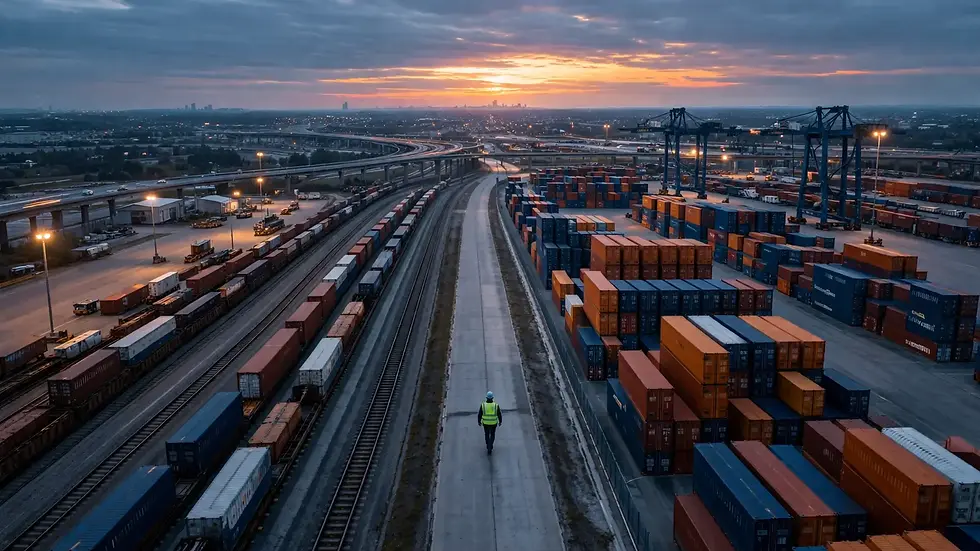
Why Logistics Leadership Matters More Than Ever
There is a significant difference between logistics management and logistics leadership. Management is about efficiency, processes, and systems. Leadership is about people, decisions, culture, and the ability to navigate complexity when the playbook no longer applies. The best supply chain technology in the world is useless without leaders who can build the teams to implement it.
ManpowerGroup's 2026 Global Talent Shortage report found that more than seven in ten employers report difficulty finding the talent they need. Research from L2L and BrainWorks in 2026 indicates that up to 1.9 million manufacturing and logistics jobs could remain unfilled in the United States alone. ASCM's 2025 trends report explicitly flags workforce evolution and a growing talent shortage as strategic issues for the function.
The conversation in 2026 has shifted from dashboards and analytics to AI agents, orchestration, scenario simulation, and automated execution workflows. Leaders now need to govern human-machine decisions, not just sponsor software projects. Add tariff volatility, nearshoring pressure, forced-labour regulation, and carbon compliance to the mix, and it becomes clear that the logistics leader of 2026 needs a fundamentally different capability set than the logistics manager of 2016.
The thought leaders on this list are the ones helping the industry build that capability set. They span academia, consulting, media, and senior operations. They come from the United States, United Kingdom, Australia, Singapore, Germany, Canada, the Netherlands, Denmark, Switzerland, the UAE, and beyond.
Academic and Research Leaders
The academic voices on this list are not ivory tower theorists. They are researchers whose work directly shapes how organisations design, lead, and transform their supply chains. Their frameworks become the language that practitioners use in boardrooms and on factory floors.
1. Yossi Sheffi
Role: Professor of Engineering Systems and Director, MIT Center for Transportation and Logistics
Location: Cambridge, Massachusetts, USA
Yossi Sheffi has spent more than four decades at MIT studying how supply chains respond to disruption, risk, and complexity. He is the author of several bestselling books including The Resilient Enterprise, The Power of Resilience, Logistics Clusters, and The New (Ab)Normal, which examined how COVID-19 permanently changed supply chain operations.
He is one of only two official LinkedIn Influencers in the supply chain space, and his thought leadership regularly reaches hundreds of thousands of professionals. His research blends rigorous academic methodology with real-world applicability, which is why executives at the largest logistics companies in the world cite his frameworks when making network redesign decisions.
If you lead a logistics team and you have not read his work on resilience, start there. His concept of logistics clusters, exploring why certain geographic areas become magnets for logistics activity, remains one of the most practically useful ideas in the field.
Known for: Supply chain resilience, risk management, logistics clusters, MIT CTL
Where to follow: LinkedIn, MIT CTL publications
2. Hau L. Lee
Role: Professor, Stanford Graduate School of Business and Director, Stanford Global Supply Chain Management Forum
Location: Stanford, California, USA
Hau Lee is the mind behind the Triple-A Supply Chain concept, which argues that the best supply chains are not simply fast and cost-effective but are agile, adaptable, and aligned. That framework, originally published in Harvard Business Review, has become one of the most cited ideas in supply chain strategy.
His work at Stanford's Global Supply Chain Management Forum brings together academic research and corporate practice in ways that directly influence how companies design their logistics networks. His research on trust, confidence, and collaborative planning across supply chain partners continues to shape how senior leaders think about inter-organisational relationships.
Lee's influence is quiet but deep. His frameworks show up in the strategy documents of Fortune 500 companies even when his name is not cited directly.
Known for: Triple-A Supply Chain, agility, adaptability, alignment, Stanford research
Where to follow: Stanford GSB publications
3. Richard Wilding
Role: Emeritus Professor of Supply Chain Strategy, Cranfield School of Management
Location: United Kingdom
Richard Wilding is one of the most globally recognised thought leaders in logistics and supply chain strategy. His philosophy of "Knowledge into Action" ensures that all his research and consulting work has a practical impact on industry operations.
He has published widely in the area of supply chain management and serves as Editorial Advisor to several top academic journals. His work spans pharmaceutical, retail, automotive, high technology, food and beverage, and professional services sectors. He regularly speaks at industrial conferences and has undertaken lecture tours across Europe and Asia.
Wilding's outstanding contribution to supply chain excellence has been recognised with multiple awards and consistent inclusion in global influencer lists. For logistics leaders in Europe, his work at Cranfield represents the gold standard for applied supply chain research.
Known for: Supply chain strategy, procurement, applied logistics research
Where to follow: LinkedIn, Cranfield publications, richardwilding.info
4. Martin Christopher
Role: Emeritus Professor of Marketing and Logistics, Cranfield School of Management
Location: United Kingdom
Martin Christopher is the author of Logistics and Supply Chain Management, widely regarded as one of the most influential textbooks in the field. His work has shaped how an entire generation of supply chain professionals thinks about the relationship between logistics and business performance.
His emphasis on building agile supply chains that respond quickly to changes in market conditions was ahead of its time. His research on demand management, network design, and the integration of logistics functions within the broader supply chain remains foundational for anyone serious about logistics leadership.
Christopher's academic contributions are complemented by extensive consulting work with major corporations globally. His book remains essential reading for anyone stepping into a logistics leadership role for the first time.
Known for: Agile supply chains, logistics strategy, foundational SCM frameworks
Where to follow: Academic publications, Cranfield School of Management
5. Nada R. Sanders
Role: Distinguished Professor of Supply Chain and Information Management, Northeastern University
Location: Boston, Massachusetts, USA
Nada Sanders brings a distinctive focus on forecasting, risk analytics, and the intersection of human judgment with technology-driven decision making. Her research at Northeastern University's D'Amore-McKim School of Business addresses one of the most pressing challenges in logistics leadership: how to integrate AI and analytics without losing the human capability to manage ambiguity and build trust.
Her work on resilient supply chain strategy is particularly relevant in 2026, when leaders are navigating tariff shocks, geopolitical fragmentation, and rapid AI deployment simultaneously. Sanders provides frameworks that help leaders think about technology adoption not as a project but as a leadership capability.
For logistics leaders who feel overwhelmed by the pace of digital transformation, her research offers a structured way to think about human-technology integration.
Known for: Forecasting, analytics, human-technology integration, resilient strategy
Where to follow: LinkedIn, Northeastern University publications
Consultants, Advisors, and Strategy Voices
The consultants and advisors on this list shape how organisations actually redesign their supply chains. They sit in boardrooms, lead transformation programmes, and publish the frameworks that practitioners apply on the ground.
6. Lora Cecere
Role: Founder, Supply Chain Insights
Location: Philadelphia, Pennsylvania, USA
Lora Cecere is the other official LinkedIn Influencer in the supply chain space, earned through decades of relentless research and writing. She founded Supply Chain Insights after senior roles at Gartner Group, AMR Research, and Altimeter Group, and she has held leadership positions at Procter and Gamble, Kraft, Clorox, and Dreyer's Grand Ice Cream.
Her research firm focuses on helping supply chain leaders design and manage better supply chains using data-driven insights. She is the author of Supply Chain Metrics that Matter and Bricks Matter, and she writes monthly columns for industry publications as well as her long-running Supply Chain Shaman blog.
Cecere was honoured as the Outstanding Woman in Supply Chain by the University of Tennessee in 2017. Her ability to connect corporate financial performance to supply chain maturity makes her one of the most valuable analytical voices in the industry.
Known for: Supply chain metrics, no-nonsense industry analysis, B2B networks
Where to follow: LinkedIn, Supply Chain Shaman blog, Forbes
7. Knut Alicke
Role: Partner, McKinsey and Company
Location: Germany
Knut Alicke leads McKinsey's Supply Chain Executive Academy and is one of the most influential consultants shaping board-level supply chain transformation globally. He co-authored From Source to Sold with Radu Palamariu, a book that makes a compelling case for why supply chain leaders deserve a seat in the C-suite.
His work at McKinsey spans advanced supply chain analytics, resilience strategies, and digitisation programmes for some of the world's largest companies. What sets Alicke apart is his ability to translate complex analytical concepts into language that CEOs and board directors can act on.
For logistics leaders who need to make the business case for supply chain investment at the executive level, Alicke's frameworks and publications are essential reference material.
Known for: Board-level supply chain transformation, resilience, digitisation
Where to follow: LinkedIn, McKinsey publications
8. Radu Palamariu
Role: Group CEO, Alcott Global
Location: Singapore
Radu Palamariu hosts the Leaders in Supply Chain and Logistics Podcast, one of the most respected interview-format shows in the industry. Through Alcott Global, he works as an executive recruiter and advisor specifically focused on supply chain leadership across Asia Pacific and globally.
He co-authored From Source to Sold with Knut Alicke, compiling leadership lessons from senior supply chain executives around the world. His podcast guests include C-suite leaders from some of the largest logistics companies on the planet.
Palamariu brings a unique perspective because he sits at the intersection of talent, leadership, and supply chain strategy. He understands what makes great supply chain leaders because he spends his career finding and placing them. His work shaping the "supply chain leader to CEO" conversation is particularly valuable for mid-career professionals thinking about their trajectory.
Known for: Executive search, Asia Pacific logistics, leadership talent, podcasting
Where to follow: LinkedIn, Leaders in Supply Chain Podcast, Alcott Global
9. Rob O'Byrne
Role: Owner and Group CEO, Logistics Bureau
Location: Australia
Rob O'Byrne leads Logistics Bureau, one of Australia's most established supply chain consulting firms. He has built a reputation for practical, operator-focused insights that translate directly into warehouse, transport, and distribution improvements.
What distinguishes O'Byrne from many thought leaders is his consistently high publishing cadence. He produces regular content aimed at logistics professionals who are managing real operations, not just thinking about strategy. His credibility across the Asia Pacific region is particularly strong.
For logistics leaders in Australia, New Zealand, and Southeast Asia, O'Byrne represents a local voice with genuine depth. His consulting work covers supply chain strategy, warehouse design, transport optimisation, and inventory management.
Known for: APAC logistics consulting, practical operator-focused insights
Where to follow: LinkedIn, Logistics Bureau
10. Bindiya Vakil
Role: CEO, Resilinc
Location: USA
Bindiya Vakil founded Resilinc, a platform that provides deep-tier supply chain mapping and proactive risk monitoring. Her company helps organisations see beyond their immediate suppliers to understand the full network of sub-tier dependencies that create hidden vulnerabilities.
Her thought leadership is grounded in real-time data about supply chain disruptions, which gives her commentary a specificity that most analysts cannot match. When she talks about risk, she is drawing on proprietary intelligence from thousands of supply chain events tracked annually.
Vakil's work is especially relevant in 2026 as leaders navigate tariff volatility, forced-labour compliance requirements, and the ongoing fragmentation of global trade networks. Her voice is one of the most credible on the topic of proactive risk management.
Known for: Deep-tier supply chain mapping, risk monitoring, disruption intelligence
Where to follow: LinkedIn, Resilinc
11. Lisa Anderson
Role: President, LMA Consulting Group
Location: USA
Lisa Anderson has built her reputation around reshoring strategies and advanced inventory management, two topics that have moved from niche interest to mainstream urgency in 2025-2026. Her consulting practice helps manufacturers and logistics leaders redesign their supply networks in response to tariff pressure and geopolitical risk.
She publishes regularly on the practical realities of bringing production closer to end markets, including the cost implications, talent challenges, and infrastructure requirements that most reshoring commentary glosses over. Her perspective is grounded in decades of consulting work with mid-market manufacturers.
For logistics leaders navigating the nearshoring conversation, Anderson provides the operational detail that turns strategic intent into executable plans.
Known for: Reshoring, nearshoring, inventory strategy, manufacturing leadership
Where to follow: LinkedIn, LMA Consulting Group
Media, Podcast Hosts, and Community Builders
The media voices in this space do more than report on the industry. They shape the conversation by choosing which leaders get a platform, which topics get airtime, and which ideas reach the broadest audience. The podcast hosts and community builders on this list have earned their influence through years of consistent, high-quality content.
12. Sarah Barnes-Humphrey
Role: Founder, Let's Talk Supply Chain
Location: Canada
Sarah Barnes-Humphrey is one of the most recognisable media personalities in supply chain. She founded Let's Talk Supply Chain, which has grown into a multimedia platform including a popular podcast, a YouTube channel, and a thriving online community. She has been named one of the Top 100 Global Women Leaders in Supply Chain.
Her content focuses on the human side of supply chain, including leadership development, talent, diversity, and the people behind the operations. She also leads interactive workshops on leadership skills for supply chain professionals.
Barnes-Humphrey's ability to make the industry feel accessible and human has built a loyal following among professionals at every career stage. Her weekly LinkedIn content and live discussions are consistently among the most engaged posts in the supply chain space.
Known for: Supply chain media, leadership, diversity, community building
Where to follow: LinkedIn, Let's Talk Supply Chain podcast, YouTube
13. Daniel Stanton
Role: Founder and CEO, Mr. Supply Chain
Location: USA
Daniel Stanton has become one of the most accessible educators in the supply chain world. With over 160,000 LinkedIn followers, he has a gift for translating complex logistics concepts into language that both beginners and experienced professionals can use immediately.
He is the author of Supply Chain Management for Dummies, a LinkedIn Learning instructor, and a supply chain futurist at IBM. His weekly LinkedIn newsletter, Supply Chained, has become essential reading for professionals wanting to stay current on industry trends and leadership thinking.
What makes Stanton stand out is his warmth and approachability. He genuinely wants to help people at every level of the supply chain get better at their work, and that generosity of spirit shows in everything he produces.
Known for: Supply chain education, accessibility, LinkedIn Learning
Where to follow: LinkedIn, YouTube, Supply Chained newsletter
14. Muddassir Ahmed
Role: Founder and CEO, SCMDOJO
Location: Dubai, UAE
Muddassir Ahmed holds a PhD in Management Science from Lancaster University and has 17 years of experience in manufacturing and supply chain leadership across the UK, Europe, the Middle East, and South East Asia. He is a Six Sigma Black Belt and a recognised global speaker.
He founded SCMDOJO, which has grown into one of the leading supply chain education platforms in the world, serving over 51,000 monthly visitors and 71,000 newsletter subscribers. His social media following exceeds 107,000 supply chain professionals. He has been recognised among the Top 10 Supply Chain Influencers globally by Supply Chain Digital.
Ahmed's platform provides on-demand courses, tools, guides, and access to experts that help supply chain professionals develop their capabilities. His content is consistently practical and implementation-focused.
Known for: Supply chain education, operational excellence, Six Sigma, global influence
Where to follow: LinkedIn, SCMDOJO.com, SCMDOJO Podcast
15. Adrian Gonzalez
Role: President, Adelante SCM and Host, Talking Logistics
Location: USA
Adrian Gonzalez is a veteran industry analyst who has been covering logistics and supply chain management for decades. He hosts Talking Logistics, an online video talk show where he interviews thought leaders and newsmakers in the industry. He also founded Indago, a peer-to-peer research community.
His analysis is consistently balanced, well-researched, and focused on practical implications for logistics leaders. He covers technology trends, operational strategies, and industry shifts with a depth that reflects years of immersion in the sector.
Gonzalez is particularly valuable for logistics leaders who want to stay current on technology trends without the hype. His interviews and weekly commentary cut through vendor marketing to focus on what actually works in practice.
Known for: Industry analysis, logistics technology, long-form interviews
Where to follow: LinkedIn, Talking Logistics
16. Craig Fuller
Role: CEO and Founder, FreightWaves
Location: Chattanooga, Tennessee, USA
Craig Fuller founded FreightWaves, the only freight-focused organisation offering a complete view of the freight and logistics market through news, content, data, insights, and risk management tools. A trucking industry veteran, he previously founded and managed the Xpress Direct division of US Xpress Enterprises.
Fuller built FreightWaves into a platform that combines real-time market data with journalism and analysis, creating a Bloomberg-style resource for the freight industry. His thought leadership focuses on market dynamics, freight pricing, technology disruption, and the business strategy behind logistics.
For logistics leaders who need to understand freight market conditions in real time, Fuller's platform has become essential infrastructure.
Known for: Freight market data, trucking industry, logistics media
Where to follow: LinkedIn, FreightWaves
17. Scott Luton
Role: Founder, Supply Chain Now
Location: Atlanta, Georgia, USA
Scott Luton has built Supply Chain Now into one of the most active media platforms in the logistics industry. The platform produces regular podcasts, live streams, and industry analysis covering supply chain strategy, digital procurement, and leadership trends.
His focus on making supply chain topics accessible to a broad audience, combined with consistent publishing frequency, has made Supply Chain Now a reliable source for professionals who want to stay informed without committing to lengthy research reports.
Luton's combination of media production skill and genuine industry curiosity creates content that is both informative and engaging. He consistently platforms diverse voices and emerging perspectives, which strengthens the quality of conversations across the industry.
Known for: Supply chain media, digital procurement, industry trends
Where to follow: LinkedIn, Supply Chain Now podcast
Sustainability, Technology, and Future-Focused Voices
The leaders in this category are shaping the future of logistics by addressing the intersection of sustainability, digital transformation, and operating model redesign. They are the voices logistics leaders turn to when the question is not "what happened?" but "what comes next?"
18. Sheri Hinish
Role: Global Consulting Sustainability Services, Technology and Ecosystems Leader, EY
Location: USA
Known across the industry as the Supply Chain Queen, Sheri Hinish has become one of the most influential voices at the intersection of supply chain management and sustainability. She is a Harvard graduate who brings both academic rigour and consulting depth to the sustainability challenge.
She founded the Supply Chain Revolution podcast, which features stories of innovation and purpose-driven transformation across global supply chains. Her accolades include Top 250 Leaders in Sustainability, Leaders in Excellence from Supply and Demand Chain Executive, and Top 100 Women in Sustainability in Supply Chain.
If you are leading a logistics operation and trying to figure out how to balance performance with environmental responsibility, particularly around circular economy principles, digital product passports, and verifiable sustainability, Hinish is the voice to follow.
Known for: Sustainability, circular economy, ESG, purpose-driven leadership
Where to follow: LinkedIn, Supply Chain Revolution podcast
19. Tom Raftery
Role: Digital Supply Chain Executive and Podcast Host
Location: Spain
Tom Raftery covers the intersection of clean energy, technology adoption, and sustainability within logistics and supply chain. His Digital Supply Chain podcast is one of the most frequently cited shows for leaders interested in how emerging technology will reshape logistics operations.
His perspective is distinctly European, which provides a valuable counterbalance to the US-centric focus of much supply chain media. He covers regulatory environments, sustainability mandates, and digital transformation with a practitioner's eye for implementation.
Raftery posts frequently on LinkedIn and is known for combining data-driven analysis with accessible commentary that helps leaders understand which technologies are ready for deployment and which are still speculative.
Known for: Clean energy logistics, digital transformation, sustainability tech
Where to follow: LinkedIn, Digital Supply Chain Podcast
20. Sean Culey
Role: Futurist and Author
Location: United Kingdom
Sean Culey is the author of Transition Point: From Steam to the Singularity, which examines how robotics, AI, and automation are fundamentally reshaping supply chain operations. His focus is on what he calls Supply Chain 4.0, the convergence of physical and digital supply chains.
His thought leadership sits at the intersection of technology futurism and operational reality. He does not simply predict what is coming. He helps leaders think through the organisational, workforce, and leadership implications of major technology shifts.
For logistics leaders who feel the ground shifting under their feet with AI agents, autonomous warehouses, and human-machine collaboration, Culey provides a structured way to think about the transition.
Known for: Robotics, AI, Supply Chain 4.0, future of work
Where to follow: LinkedIn
21. Elouise Epstein
Role: Supply Chain Technology Thought Leader and Adviser
Location: USA
Elouise Epstein is one of the sharpest voices on digital procurement disruption and the technology stack behind modern supply chains. Her book Radical Procurement challenges conventional thinking about how procurement and supply chain technology should be designed and deployed.
Her analysis of platform strategy, digital supply networks, and enterprise technology architecture helps logistics leaders make more informed decisions about technology investments. She cuts through vendor hype with a practitioner's understanding of what actually works.
Epstein's thought leadership is particularly relevant for logistics leaders evaluating AI procurement tools, digital twins, and orchestration platforms in 2026.
Known for: Digital procurement, platform strategy, supply chain technology
Where to follow: LinkedIn
Senior Practitioners and Operator-Leaders
Academic frameworks and consulting advice only matter if they can be applied in real operations. The practitioners on this list lead supply chains at scale, and their thought leadership is grounded in the daily reality of managing complexity, cost, and people across global networks.
22. John Gattorna
Role: Principal, Gattorna Alignment
Location: Australia
John Gattorna is the mind behind the concept of dynamic supply chain alignment, which argues that supply chains must be designed around customer buying behaviours rather than internal operational convenience. His book Dynamic Supply Chains has been influential in shifting how logistics leaders think about segmentation and network design.
Based in Australia, Gattorna brings decades of consulting experience with major corporations across Asia Pacific and globally. His frameworks help leaders move beyond one-size-fits-all supply chain models to create differentiated logistics strategies that match real market demand patterns.
For logistics leaders who feel trapped in a supply chain model that no longer fits their customer base, Gattorna's work provides the intellectual foundation for redesign.
Known for: Dynamic supply chain alignment, customer-centric logistics, APAC strategy
Where to follow: LinkedIn, Gattorna Alignment
23. Rosemary Coates
Role: Executive Director, Reshoring Institute
Location: USA
Rosemary Coates is a global supply chain, procurement, and manufacturing expert with a particular focus on Chinese sourcing and manufacturing. She brings 30 years of experience in industry, consulting, and expert witnessing, and has consulted with organisations in 80 countries.
She is the author of five supply chain books, including an Amazon bestseller. Her work with the Reshoring Institute provides critical thought leadership at a time when nearshoring and supply chain localisation are reshaping global logistics networks.
Coates brings a uniquely practical perspective to the geopolitical dimensions of supply chain leadership, helping leaders navigate tariff changes, sourcing shifts, and the complex reality of global manufacturing in 2026.
Known for: Reshoring, China sourcing, global manufacturing, expert witness
Where to follow: LinkedIn, Reshoring Institute
24. Jim Tompkins
Role: Founder, Tompkins International and Tompkins Ventures
Location: USA
Jim Tompkins is an international authority on supply chain design with a career spanning five decades. He founded Tompkins International and built it into a global consulting firm before establishing Tompkins Ventures in 2020 and Tompkins Leadership in 2022.
Over the course of his career, he has founded 15 businesses generating over $2 billion in revenue. His expertise spans supply chain strategy, distribution network design, warehouse optimisation, and leadership development.
Tompkins has authored multiple books on supply chain leadership. His transition from consulting to venture capital and leadership development reflects the evolving nature of the industry itself and the growing recognition that supply chain is as much a leadership challenge as an operational one.
Known for: Supply chain design, distribution networks, venture capital
Where to follow: LinkedIn, Tompkins Ventures
25. Mark Millar
Role: Keynote Speaker and Supply Chain Advisor
Location: Hong Kong
Mark Millar is one of Asia's foremost keynote speakers on supply chain and logistics. With more than 30 years of global business experience including leadership roles at DHL, UPS Supply Chain Solutions, ModusLink, and Exel Contract Logistics, he brings deep operational credibility to his speaking and advisory work.
He has spent over 25 years in the Asia Pacific region, leading business development initiatives across ten Asian countries. His thought leadership articles have been published in more than 100 international trade media channels and industry journals.
Millar is also an accomplished event host, moderator, and conference chairman. If you are organising a supply chain event in Asia or globally and need someone who combines industry depth with exceptional communication skills, he is a standout choice.
Known for: Asia Pacific supply chains, keynote speaking, event hosting
Where to follow: LinkedIn, markmillar.com
26. Maria Villablanca
Role: Founder, Villablanca Consulting
Location: United Kingdom / Spain
Maria Villablanca has established herself as an influential voice in supply chain transformation, media, and championing women in supply chain leadership. She combines consulting work with an active media presence, regularly contributing to conversations about how supply chain organisations need to evolve their leadership capabilities.
Her focus on diversity and representation in logistics leadership is not performative. She backs it with practical work helping organisations redesign their talent development and succession planning to build more diverse leadership pipelines.
Villablanca posts regularly on LinkedIn and brings a distinctly European and global perspective to supply chain leadership conversations that are often dominated by North American voices.
Known for: Supply chain transformation, women in leadership, diversity
Where to follow: LinkedIn, Villablanca Consulting
27. Wolfgang Lehmacher
Role: Independent Adviser on Supply Chain, Logistics, and Transport
Location: Germany / Switzerland
Wolfgang Lehmacher is a global commentator on supply chain, logistics, and transport who provides cross-border perspectives on trade, infrastructure, and the future of global logistics networks. His commentary spans geopolitical risk, trade policy, infrastructure development, and the structural changes reshaping global freight flows.
He publishes regularly on LinkedIn and in international media, providing analysis that helps logistics leaders understand the macro forces shaping their operational environment. His work is particularly valuable for leaders who need to think beyond their own supply chain to understand how global trade architecture is evolving.
Lehmacher's European base and global network give him a perspective that complements the North American voices that dominate much of the supply chain thought leadership landscape.
Known for: Cross-border logistics, trade policy, global infrastructure
Where to follow: LinkedIn
Essential Podcasts for Logistics Leaders
If you want to hear regular leadership conversations from the people on this list and their peers, these are the podcasts to start with. Leaders in Supply Chain and Logistics Podcast, hosted by Radu Palamariu, features executive-level interviews with C-suite supply chain leaders. Let's Talk Supply Chain, hosted by Sarah Barnes-Humphrey, focuses on collaboration, culture, and emerging talent. Supply Chain Now, hosted by Scott Luton, covers digital procurement and industry trends through panels and interviews.
Talking Logistics, hosted by Adrian Gonzalez, provides long-running weekly commentary on logistics technology and industry newsmakers. The Digital Supply Chain Podcast, hosted by Tom Raftery, covers clean energy, sustainability, and emerging technology. FreightWaves Radio provides real-time freight market analysis. The SCMDOJO Podcast, hosted by Muddassir Ahmed, offers practical education on operational excellence and logistics management.
The Tennessee on Supply Chain Management podcast, backed by the University of Tennessee, is particularly strong on leadership lessons and strategic issues. Supply Chain Revolution, associated with Sheri Hinish, covers technology, transformation, and sustainability leadership.
Essential Books for Logistics Leaders
Several of the thought leaders on this list are also published authors whose books are widely recommended in the field. From Source to Sold by Knut Alicke and Radu Palamariu makes the case for supply chain leaders earning C-suite influence. The Resilient Enterprise and The Power of Resilience by Yossi Sheffi remain two of the most cited books on disruption leadership. Logistics and Supply Chain Management by Martin Christopher is foundational for anyone serious about the relationship between logistics and business performance.
Supply Chain Management for Dummies by Daniel Stanton is recommended for both beginners and experienced professionals. Dynamic Supply Chains by John Gattorna provides the intellectual foundation for customer-centric logistics design. Supply Chain Metrics that Matter by Lora Cecere connects operational metrics to financial performance. Transition Point by Sean Culey examines how robotics and AI are reshaping supply chain operations.
Common Mistakes in Developing Logistics Leaders
The most common mistake organisations make is treating leadership development as generic management training rather than a supply-chain-specific capability system. Gartner's finding that only 49% of supply chain leadership development programs are rated effective suggests many programs are too generic or outdated for the demands of modern logistics leadership.
Organisations also overweight technical skills and underweight influence, ambiguity management, systems thinking, and cross-functional leadership. Both the World Economic Forum and APQC research point toward this broader capability mix as essential for logistics leaders in 2026.
Another common pattern is promoting great operators without teaching them how to lead across procurement, finance, sales, tax, and technology. The logistics leader of 2026 needs to operate as a general manager, not just an operational specialist. Failing to create rotational pathways across warehousing, transportation, planning, procurement, and customer-facing functions limits the development of leaders who can think end-to-end.
Perhaps the most dangerous mistake is confusing technology implementation with leadership development. AI can improve decisions, but it does not replace judgment, trust-building, or stakeholder alignment. The leaders who thrive in 2026 will be the ones who can manage human-machine collaboration, not just deploy software.
Frequently Asked Questions
Who are the most influential thought leaders in logistics leadership globally?
The most influential thought leaders span academia, consulting, media, and senior practice. Key names include Yossi Sheffi at MIT, Hau Lee at Stanford, Lora Cecere at Supply Chain Insights, Knut Alicke at McKinsey, Sarah Barnes-Humphrey at Let's Talk Supply Chain, and Richard Wilding at Cranfield. The full list of 27 leaders in this article covers voices from the United States, United Kingdom, Australia, Singapore, Germany, Canada, the Netherlands, Switzerland, the UAE, and beyond.
What makes logistics leadership different from general leadership?
Logistics leadership requires the ability to manage complexity across functions, geographies, and organisations simultaneously. Unlike many leadership roles that operate within a single business unit, logistics leaders must coordinate across procurement, manufacturing, transportation, warehousing, technology, and customer service. They also navigate regulatory environments, trade policy, and geopolitical risk in ways that most general managers do not.
Which supply chain leadership podcasts should I listen to?
The Leaders in Supply Chain and Logistics Podcast by Radu Palamariu is ideal for executive-level interviews. Let's Talk Supply Chain by Sarah Barnes-Humphrey covers leadership, diversity, and industry trends. Talking Logistics by Adrian Gonzalez provides balanced technology analysis. Supply Chain Now by Scott Luton offers broad industry coverage through panels and interviews.
What are the biggest challenges facing logistics leaders in 2026?
The biggest challenges include managing AI-driven decision systems alongside human teams, navigating tariff volatility and trade fragmentation, addressing a critical talent shortage with up to 1.9 million unfilled logistics jobs in the US alone, meeting rising sustainability and compliance requirements, and redesigning global networks in response to nearshoring pressure.
Can I hire someone to facilitate leadership development for my logistics team?
Yes. Jonno White, Certified Working Genius Facilitator and bestselling author of Step Up or Step Out, works with leadership teams across industries including logistics and supply chain. His work includes keynote speaking, Working Genius facilitation, leadership team offsites, and executive coaching. To discuss how Jonno might support your logistics leadership team, email jonno@consultclarity.org.
Which books should a new logistics leader read first?
Start with Logistics and Supply Chain Management by Martin Christopher for foundational frameworks. Add The Resilient Enterprise by Yossi Sheffi for risk and disruption thinking. Supply Chain Management for Dummies by Daniel Stanton is excellent for accessible, practical coverage. From Source to Sold by Knut Alicke and Radu Palamariu provides the strategic perspective on how supply chain leaders can influence at the executive level.
Final Thoughts
The logistics and supply chain industry has never been more complex or more important. The leaders who will thrive in this environment are the ones who invest in their own development by learning from the best thinkers in the field. The 27 thought leaders on this list represent a starting point, not an exhaustive list.
If you are someone who should be on this list and I have not yet discovered your work, I would love to hear from you. I am always looking to learn from people doing excellent work in this space.
And if you are a logistics or supply chain leader whose team needs help getting healthier as a unit, whether that means better communication, clearer alignment, or a more honest conversation about what is and is not working, that is exactly what I do.
Jonno White, Certified Working Genius Facilitator and trusted facilitator across Australia, UK, USA, Singapore, Canada, India, and beyond, delivers keynotes, workshops, and leadership team offsites for organisations around the world. International travel is often far more affordable than clients expect. To explore how Jonno could support your team, email jonno@consultclarity.org.
If you are not sure where your leadership team stands right now, take the free Leadership Team Health Scorecard at consultclarity.org/scorecard. It takes five minutes and shows you exactly where the gaps are.
About the Author
Jonno White is a Certified Working Genius Facilitator, bestselling author, and leadership consultant who has worked with schools, corporates, and nonprofits across the UK, India, Australia, Canada, Mongolia, New Zealand, Romania, Singapore, South Africa, USA, Finland, Namibia, and more. His book Step Up or Step Out has sold over 10,000 copies globally, and his podcast The Leadership Conversations has featured 230+ episodes reaching listeners in 150+ countries. Jonno founded The 7 Questions Movement with 6,000+ participating leaders and achieved a 93.75% satisfaction rating for his Working Genius masterclass at the ASBA 2025 National Conference. Based in Brisbane, Australia, Jonno works globally and regularly travels for speaking and facilitation engagements. Organisations consistently find that international travel is far more affordable than expected.
To book Jonno for your next keynote, workshop, or facilitation session, email jonno@consultclarity.org.